

GIRL (女孩) (2026)
Genre: Drama
Director: Shu Qi
Cast: Roy Chiu, 9m88, Bai Xiao Ying, Audrey Lin
Runtime: 2 hr 4 mins
Rating: M18 (Sexual Violence)
Released By: Shaw Organisation
Official Website:
Opening Day: 16 April 2026
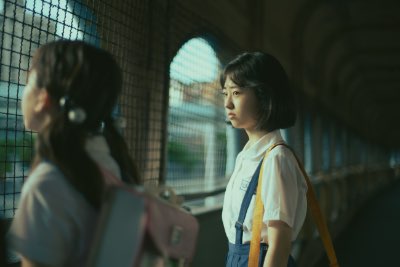
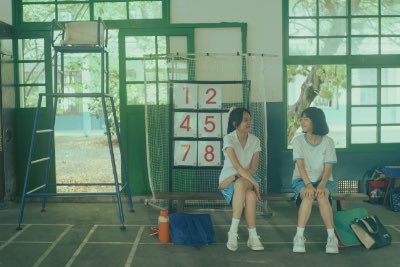
Synopsis: In her debut behind the camera, Shu Qi unveils a delicate portrait of generational trauma and resilience. Taiwan, 1988. Hsiao-lee, a quiet and withdrawn girl, grows up in silent gloom. Her encounter with Li-li, vibrant and carefree, reawakens long-buried dreams. But just as she begins to open up to the world, her mother Chuan's past resurfaces, echoing her own pain. Caught between inherited sorrow and a longing for freedom, Hsiao-lee must navigate the shadows of a life she never chose.
Movie Review:
Before stepping behind the camera, Shu Qi built an illustrious career working with auteurs, most notably Hou Hsiao-hsien in films like Millennium Mambo (2001), Three Times (2005) and The Assassin (2015). With Girl, her directorial debut, Shu’s reverence for Hou’s style is immediately evident. The film carries the same meditative rhythms, long takes, and quiet observational approach that defined his work — not as imitation, but as a deeply personal continuation of that cinematic language.
Set in late 1980s Taiwan, Girl follows an introverted young protagonist growing up in a fractured household. Her father is volatile and abusive, her mother is seemingly uncaring and emotionally withdrawn. Within this oppressive environment, the girl drifts through daily life, absorbing the tensions around her while quietly trying to make sense of the world. The story is reportedly drawn in part from the director’s own childhood, and that personal connection lends the film an authenticity that resonates even in its most restrained moments.
This is not a film that rushes to tell its story. Instead, it invites viewers to slow down, to sit with its characters, and to absorb the textures of each scene. Long, unhurried takes allow emotions to surface gradually, while the camera lingers on spaces and. For audiences willing to meet it at its pace, Girl becomes a deeply immersive experience — one that prioritises mood and memory over conventional narrative momentum.
The film is also rich with symbolism, offering layers that extend beyond the immediate story. For those familiar with Taiwan’s socio-cultural landscape of the 1980s, these details may carry added meaning. But even without that context, the emotional undercurrents remain accessible. The sense of confinement, longing and quiet resilience transcends time and place.
Performance-wise, Roy Chiu leaves a strong impression as the abusive father. Once known for his heartthrob image, Chiu sheds any lingering charm here to embody a man capable of cruelty that provokes immediate discomfort. Yet, in quieter moments, glimpses of vulnerability emerge, hinting at a brokenness that complicates what could have been a one-dimensional role.
Equally compelling is 9m88, who plays the mother struggling to hold the household together. Her performance carries a quiet strength — a woman worn down by circumstance but still trying, in her own imperfect way, to endure. There is a dignity in her restraint that makes her character deeply affecting.
At the centre is child actress Bai Xiao-Ying, who delivers a remarkably understated performance as the titular girl. She captures a specific phase of youth — one that feels muted, even dreary, yet profoundly formative. Through her eyes, the film becomes a portrait of growing up in emotional isolation, where small moments carry immense weight.
If the film’s pacing and tone demand patience, its closing moments offer a quiet but powerful reward. The ending is one of the most beautifully realised in recent memory, leaving behind a lingering melancholy that stays with you long after the screen fades to black.
Ultimately, Girl is less about plot than it is about feeling — a reflective, intimate work that marks a confident and deeply personal debut from one of Taiwan’s biggest stars.
Movie Rating:

(A quiet and meditative debut from Shu Qi where silence and stillness speak volumes)
Review by John Li
You might also like:





Movie Stills