


SYNOPSIS: A young man with cerebral palsy tries to help his grandmother achieve her long-held stage dreams while mending family ties and discovering his own path.
MOVIE REVIEW:
After watching Big World, it becomes clear why Jackson Yee deserved to win Best Actor at both the 37th Tokyo International Film Festival and the 38th Golden Rooster Awards.
Yee plays Liu Chunhe, a young man living with Cerebral palsy. Despite his condition, Chunhe dreams of pursuing a college education and becoming a teacher. His mother, played by Jiang Qinqin, is hesitant about his ambitions, worried about the challenges he might face. Fortunately, Chunhe receives unwavering support from his free-spirited grandmother, portrayed by Diana Lin, who stands firmly behind every life decision he makes.
Strictly speaking, Big World does not follow a conventional narrative structure. Instead, it unfolds in a documentary-like style, which is hardly surprising given that director Lina Yang began her career as a documentary filmmaker. Even the cinematography by Piao Songri feels grounded and naturalistic, avoiding any stylistic flourishes that might distract from the story.
The film’s focus remains firmly on Liu Chunhe, using his experiences to highlight the needs and desires of someone living with cerebral palsy. While Chunhe’s physicality may differ from that of the average person, his ambitions are no less significant. He knows exactly what he wants—to become a qualified educator despite the protests of his overprotective mother. His determination to earn his own pocket money as a barista also reflects the unfair judgments often imposed by society, raising the question of whether people with disabilities are truly given the same opportunities as everyone else in the wider world.
The film also explores Chunhe’s budding romance with a beautiful young woman he meets in a park, played by Zhou Yutong. It raises a simple yet profound question: does someone with cerebral palsy deserve to experience love like anyone else? While certain elements of the story feel somewhat surface-level, it is still commendable that the filmmakers dare to explore such sensitive topics.
Chunhe’s relationship with his grandmother is one of the film’s most heartwarming highlights, though the movie occasionally spends a little too much time on her obsession with her singing troupe. There are also several heart-wrenching moments, including an intense shouting match between Chunhe and his mother, followed later by a deeply moving scene—one involving soft candy that is best left unspoiled.
Ultimately, Big World offers more than just Jackson Yee’s remarkable performance. It is an emotional drama that shines a light on the struggles faced by people living with cerebral palsy and, more broadly, individuals with disabilities. Although it is a Chinese production, the film speaks a universal language, one that resonates with audiences far beyond China.
MOVIE RATING:

Review by Linus Tee
SYNOPSIS: “Springsteen: Deliver Me from Nowhere” chronicles the making of Bruce Springsteen’s 1982 “Nebraska” album. Recorded on a 4-track recorder in Springsteen’s New Jersey bedroom, the album marked a pivotal time in his life and is considered one of his most enduring works—a raw, haunted acoustic record populated by lost souls searching for a reason to believe.
MOVIE REVIEW:
Springsteen: Deliver Me From Nowhere is a biographical drama about American singer-songwriter Bruce Springsteen, better known as “The Boss.” While Springsteen is widely regarded as a pioneer of heartland rock, he isn’t exactly a household name here, which may explain why the film skipped a theatrical release.
Based on the 2023 book Deliver Me from Nowhere by Warren Zanes, the film is not a sweeping life story. Instead, it focuses on a particularly personal chapter in Springsteen’s life during the making of his 1982 album Nebraska. The film portrays him battling not only record engineers but also his inner demons, shaped by a troubled childhood and a strained relationship with his mentally ill and sometimes abusive father, played by Stephen Graham.
Authorized by Springsteen himself, the film perhaps plays things a little too safe. Director and writer Scott Cooper known for Crazy Heart and Black Mass opts for a restrained, conventional approach. At two hours long, Springsteen: Deliver Me From Nowhere struggles to deliver a truly vivid portrait of such a colorful musician. For a figure as compelling as Springsteen, one might expect something more dynamic yet this supposed biopic spends a surprising amount of time on a fictionalized romance between Springsteen and a young single mother played by Odessa Young.
The character is reportedly a composite of several women Springsteen met in the early 1980s. Unfortunately, the relationship never quite lands emotionally, nor does it convincingly explain why Springsteen abruptly walks away. Is it due to his deep depression, or simply his melancholic disposition? The film leaves the question frustratingly underexplored.
A major portion of the story revolves around Springsteen’s determination to preserve the raw demo recordings that would eventually become Nebraska. Fortunately, Jeremy Allen White delivers a superb performance as Springsteen, even if he doesn’t quite resemble him physically. Aside from the opening sequence, we don’t hear White singing very often; instead, his performance leans more toward internalized drama, with Springsteen’s music serving primarily as the soundtrack. Jeremy Strong also brings nuance to the role of Jon Landau, Springsteen’s supportive and longtime manager.
Springsteen’s music isn’t for everyone, and neither is Springsteen: Deliver Me From Nowhere. Still, it’s a sincere effort from Cooper though it doesn’t quite reach the emotional highs of Crazy Heart or the recent A Complete Unknown. As a musician biopic, it ultimately feels somewhat shallow. But if you’re here for White’s mesmerizing performance and the film’s near-flawless production design and soundtrack, there’s still enough here to make it worthwhile.
MOVIE RATING:
Review by Linus Tee
SYNOPSIS: In this suspenseful thriller, a city-dwelling couple (Jordana Brewster, Scott Speedman) is looking to relocate to the suburbs of Portland, Oregon. While visiting the grandiose home of Emmett (Laurence Fishburne), a mysterious man with a talent for pairing the right property with the right people, the couple is suddenly gifted the house of their dreams with one nonnegotiable condition — they must never open the cellar door. As time passes, the couple realizes that old houses are indeed like people…they all have their deep, dark secrets.
MOVIE REVIEW:
From the trailer alone, you might think Cellar Door is an intriguing psychological thriller—a mix of Fatal Attraction and The Twilight Zone. But don’t get your hopes up. This is a dismal effort destined straight for the bargain bin.
To escape the recent tragedy of a miscarriage, married couple John (Scott Speedman) and Sera (Jordana Brewster) begin searching for a new home and a fresh start. Luck seems to be on their side when a mysterious wealthy benefactor, Emmett Claybourne (Laurence Fishburne), offers them his mansion free of charge. There’s only one condition: they must never open the bolted cellar door. Despite John’s initial hesitation, the couple accepts the offer.
At first, life in the mansion appears to be going well. However, things soon begin to unravel. John becomes entangled in a sexual harassment case involving his colleague Alyssa (Addison Timlin). A former tenant suddenly shows up with a gas can, threatening to burn the mansion down. Meanwhile, John discovers a bullet lodged in one of the walls. Is the house haunted or cursed? Or is Alyssa somehow behind the strange incidents after being rejected by John?
Cellar Door has plenty of potential, yet nothing remotely compelling happens throughout the film. The premise ultimately plays out like a marriage-gone-wrong soap opera, with the mysterious cellar door serving as little more than a gimmick to mislead the audience. If you’ve seen enough movies, it quickly becomes clear that John is far from a faithful husband. What follows is essentially a tedious guessing game involving Sera and Alyssa—who is going to kill whom?
The biggest joke, however, is the supposed antagonist: the cellar door itself, which John spends much of the movie trying to pry open. What role does it actually play in the story? The honest answer is none at all.
Cellar Door is so underwhelming that it barely qualifies as a mystery thriller. Even the weakest episode of The Twilight Zone surpasses this ridiculous outing. It’s so mundane, uninspired, and boring that one has to wonder who at Lionsgate thought it was a good idea to greenlight this atrocity.
MOVIE RATING:
Review by Linus Tee
Genre: Action/Thriller
Director: Kirill Sokolov
Cast: Zazie Beetz, Myha’La, Paterson Joseph, Tom Felton, Heather Graham, Patricia Arquette
Runtime: 1 hr 34 mins
Rating: R21 (Strong Violence and Sexual Scene)
Released By: Warner Bros
Official Website:
Opening Day: 26 March 2026
Synopsis: THEY WILL KILL YOU unleashes a blood-soaked, high-octane horror-action-comedy in which a young woman must survive the night at the Virgil, a demonic cult’s mysterious and twisted death-trap of a lair, before becoming their next offering in a uniquely brazen, big screen battle of epic kills and wickedly dark humor.
Movie Review:
The first thing that comes to mind while watching They Will Kill You is how gleefully it embraces stylised violence in the vein of the Kill Bill movies (2003 - 2004). Not long after the movie begins, it makes its intentions clear: this is not a film interested in restraint. Heads are cleanly severed, limbs go flying, and thick splashes of blood paint the screen in exaggerated bursts of crimson.
At one point, the film even introduces a bizarrely cute floating eyeball that trails the characters around like a morbid mascot. It’s grotesque, absurd, and occasionally darkly funny — the kind of visual excess that will delight fans of over-the-top gore while sending more squeamish viewers reaching for the exit.
The story begins as a stripped-down survival tale where the protagonist must survive in a mysterious building. As the narrative unfolds, however, the film pivots into something more ambitious — a thriller centred on a mysterious cult that has seemingly unlocked the secret to immortality.
Along the way, the film assembles a cast that adds a layer of familiarity amid the chaos. It is a welcome surprise to see Heather Graham back on screen, bringing a steady presence to an otherwise unhinged narrative. Tom Felton, long associated with his role as Draco Malfoy, sheds that image here, stepping into a more hardened character. It’s a reminder that he has long since outgrown his wizarding school days, even if the shadow of that iconic role still lingers.
The true driving force of the film, however, is Zazie Beetz. She anchors the chaos with pure bravado. While the world around her descends into increasingly absurd brutality, Beetz maintains a sense of focus. She navigates the film’s tonal shifts with conviction, making her character’s journey feel purposeful even when the narrative begins to spiral.
That said, They Will Kill You eventually runs into a familiar problem: it exhausts its own ideas. Once the premise is fully laid bare, there is little left to discover. The film continues to escalate its violence and shock value, but without adding meaningful depth, the relentless barrage starts to feel repetitive. What initially feels bold and provocative may gradually becomes tiresome for some viewers, as the film seems content to keep everything loud, graphic, and constantly in your face.
The finale encapsulates this excess. In one particularly grotesque sequence, a severed pig’s head (that talks!) becomes the centrepiece, eventually ending up perched on a character’s own head in a moment that is equal parts shocking and absurd. It’s the kind of imagery that will either thrill or repel, depending entirely on your tolerance for such extremes.
Ultimately, They Will Kill You is a film that knows exactly what it is. It delivers stylised carnage with unapologetic enthusiasm, powered by a committed central performance from Beetz. It offers lots of blood and spectacle but little in terms of depth, making it a visceral ride best suited for viewers who like their horror loud, messy, and unrestrained.
Movie Rating:

(Limbs fly and blood splatters in this unapologetically grotesque gorefest featuring a gritty performance from Zazie Beetz)
Review by John Li
SYNOPSIS: Honey Don't! is a dark comedy about Honey O'Donahue, a small-town private investigator, who delves into a series of strange deaths tied to a mysterious church.
MOVIE REVIEW:
Ethan Coen returns alongside his longtime editor, producer, and wife Tricia Cooke for the second instalment in his planned "lesbian B-movie trilogy."
The film once again stars Margaret Qualley (following Drive-Away Dolls) in the lead role as Honey O’Donahue, a private investigator operating in the small town of Bakersfield. The story opens with an intriguing prologue: a woman named Mia dies in a fatal car accident shortly after contacting Honey, fearing that something terrible was about to happen to her. Unfortunately, she dies before revealing any crucial information.
Driven by curiosity, Honey takes on the case, which leads her to the questionable Reverend Drew Devlin (Chris Evans), a shady figure surrounded by a group of incompetent henchmen. At the same time, Honey begins a romantic relationship with a police officer, MG Falcone (Aubrey Plaza). As if that weren’t enough, her teenage niece Corrine (Talia Ryder) suddenly goes missing after suffering abuse from her boyfriend, and Honey’s estranged father (Kale Browne) reappears, hoping to reconcile.
Honey Don’t ultimately ends up as another muddled effort from Coen. It aims to be a neo-noir dark crime comedy, but the excessive sex, gratuitous nudity, and bursts of violence overshadow what could have been an engaging, pulpy mystery. This is especially disappointing given its brisk runtime of just 89 minutes.
Reverend Drew Devlin is arguably the most interesting character. His bizarre sermons featuring references to macaroni add a layer of absurd humour. Beneath that eccentricity, however, he is clearly a fraud who exploits his followers and engages in sleazy dealings with a mysterious group referred to as “the French.” Unfortunately, the film never fully explores his motivations or schemes, as Coen and Cooke seem more interested in juggling inconsequential subplots and indulgent detours that disrupt the narrative momentum.
To his credit, Evans fully commits to the role, embracing the character’s sleazy charm. Plaza does her best with a paper-thin role, as does Charlie Day as a detective with a soft spot for Honey. Qualley, as always, is charismatic and highly watchable, but she ultimately deserves a stronger script.
At this point, it’s hard to say whether anticipation for Coen’s third instalment remains. There are fleeting moments that hint at his signature style and energy, but they never quite materialise into something cohesive. In the end, Honey Don’t is a murder mystery that fails to deliver a satisfying payoff despite its promising setup.
MOVIE RATING:
Review by Linus Tee
Genre: Adventure/Family
Director: Ben Gregor
Cast: Andrew Garfield, Claire Foy, Nonso Anozie, Nicola Coughlan, Jessica Gunning, Jennifer Saunders, Rebecca Ferguson
Runtime: 1 hr 50 mins
Rating: PG
Released By: Shaw Organisation
Official Website:
Opening Day: 27 March 2026
Synopsis: Based on the beloved The Faraway Tree series of novels for children, THE MAGIC FARAWAY TREE follows a modern family who find themselves forced to relocate to the remote English countryside. Exploring the natural world around their new home, the children discover a magical tree and its extraordinary and eccentric residents, including cherished characters Moonface, Silky, Dame Washalot and Saucepan Man. At the top of the tree, they are transported to spectacular and fantastical lands, and, through the joys and challenges of their adventures, the family learn to reconnect and value each other for the first time in years.
Movie Review:
As a child, this reviewer often imagined there might be a hidden portal somewhere in the bedroom — a secret passage to strange and wondrous lands waiting just beyond reach. That sense of possibility came largely from reading The Magic Faraway Tree, one of Enid Blyton’s most beloved creations. Decades on, that same magic finds new life on screen in a long-awaited adaptation that finally brings Blyton’s fantastical world to cinematic form.
For fans of the original books, this film is a warm invitation to revisit a cherished childhood memory. At the same time, it serves as an accessible gateway for younger audiences experiencing the story for the first time. The film wisely preserves the essence of Blyton’s imagination — a world where adventure begins with something as simple as climbing a tree in the woods. From there, anything feels possible.
The story follows a family adjusting to life in the countryside, where the children soon discover the extraordinary Faraway Tree. Hidden within its branches are a host of whimsical characters, including the wise-talking Moonface, the friendly Silky, and the hilarious Saucepan Man. Each visit up the tree leads to a different land drifting at its top — magical realms that change regularly, each with its own rules, delights, and dangers. It’s a premise that remains irresistibly charming: who wouldn’t want to escape into a world where imagination literally takes you somewhere new?
As a family-friendly adventure, the film also weaves in gentle moral lessons without feeling heavy-handed. In the Land of Goodies, the temptation of endless treats comes with a reminder about greed and moderation. In the Land of Birthdays, careless wishes spiral into unintended consequences, encouraging young viewers to think before they act. These lessons are simple but effective, echoing the spirit of Blyton’s storytelling while remaining relevant for modern audiences.
Visually, the film is a delight. The production design is lavish, with each land bursting with personality. The Land of Goodies dazzles with eye-popping colours and confectionery excess, while the Land of Birthdays embraces a more psychedelic aesthetic, filled with surreal, celebratory chaos. Every environment feels thoughtfully constructed, inviting viewers to linger and explore the details.
Interestingly, the film also taps into a contemporary theme: digital fatigue. In one amusing yet pointed touch, a talking fridge (voiced by Judi Dench, no less) that tracks lifestyle habits serves as a humorous contrast to the boundless imagination of the Faraway Tree. It subtly asks whether, in an age dominated by screens and algorithms, we’ve forgotten the simple magic of reading and dreaming.
The cast adds to the film’s charm. Andrew Garfield and Claire Foy bring warmth and relatability as parents trying to help their children adjust to a new environment, while the young cast infuses the story with energy and sincerity. Their performances make the fantastical elements feel grounded and emotionally engaging. Garfield even finds time to sing, which is a treat for fans of the extremely likeable actor.
Ultimately, The Magic Faraway Tree is a gentle, wholesome film that invites audiences to rediscover a sense of wonder. It may not aim for grand spectacle or cutting-edge storytelling, but that is precisely its strength. It embraces simplicity, imagination, and heart — a reminder that sometimes, the most magical journeys begin with a little belief. Leave your cynicism at the door, and you may just find yourself climbing that tree again.
Movie Rating:
(A gentle, magical adventure that rekindles imagination for young and old, wrapped in simple lessons and big-hearted charm)
Review by John Li
SYNOPSIS: Middle-aged Jem sets out from his suburban home on a journey into the woods, where he reconnects with his estranged hermit brother Ray. Bonded by a mysterious, complicated past, the men share a fraught, if occasionally tender relationship—one that was forever altered by shattering events decades earlier.
MOVIE REVIEW:
Acclaimed method actor Daniel Day-Lewis returns to the big screen after announcing his retirement in 2017. This comeback, however, comes with a hint of nepotism, he appears to have returned partly as a favour to his son, Ronan Day-Lewis, who makes his directorial debut with Anemone.
Anemone is not about the plant, but rather a slow-moving psychological drama co-written by father and son. The elder Day-Lewis plays Ray, a retired military man living a reclusive life deep in the forest. His younger brother Jem (Sean Bean) pays him a visit, hoping to persuade Ray to reconnect with Brian (Samuel Bottomley), the son Ray abandoned, who was instead raised by Jem.
Let’s be honest: Anemone is not a film for the masses. For over two hours, the audience is immersed in long stretches of silence, punctuated by howling winds, lush nature shots, and the relentless battering of storms in the last act. There isn’t much happening on the surface. Ray harbours a secret about why he withdrew from the world, while Brian struggles with anger issues, likely stemming from resentment toward the father who left him.
Yet when the drama lands, it lands with force. Ray delivers a deeply moving monologue about the trauma and PTSD he developed after a surveillance mission gone wrong. There is no doubt that Daniel Day-Lewis is the film’s greatest strength. He even manages to inject moments of unexpected humour, including a few laugh-out-loud lines—one involving a deeply inappropriate joke about a priest.
Sean Bean, on the other hand, is given far less to work with, his character mostly reacting to Ray’s shifting moods. Still, there’s an odd charm in watching Day-Lewis and Bean share awkward moments whether drunkenly dancing or engaging in a clumsy fistfight—scenes that feel strangely out of place yet oddly human.
Despite another powerhouse performance from Daniel Day-Lewis, Anemone ultimately cries out for a stronger script, one that is more grounded, less self-consciously artsy, and more emotionally satisfying in its exploration of family drama. If anything, the film demands patience; only those willing to endure its slow pace may find it rewarding.
MOVIE RATING:
Review by Linus Tee
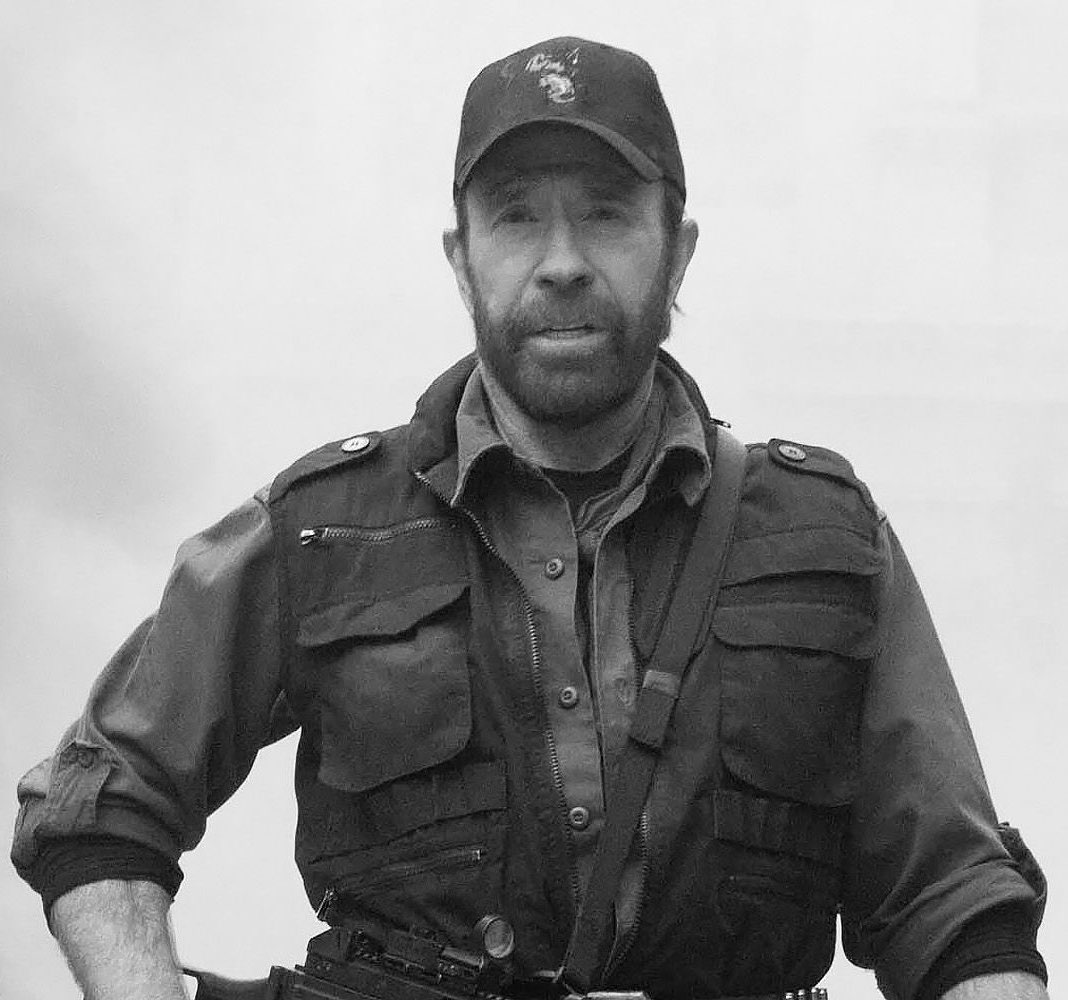
|
CHUCK NORRIS (1940 - 2026)Posted on 21 Mar 2026 |
SYNOPSIS: As their marriage quietly unravels, Alex (Will Arnett) faces middle age and an impending divorce, seeking new purpose in the New York comedy scene while Tess (Laura Dern) confronts the sacrifices she made for their family—forcing them to navigate co-parenting, identity, and whether love can take a new form.
MOVIE REVIEW:
Unlike his first two, far more polished and grand works, Bradley Cooper’s third directorial effort adopts a documentary, guerrilla-style approach to tell a story loosely inspired by British stand-up comedian John Bishop.
Is This Thing On? begins with a couple, Alex (Will Arnett) and Tess (Laura Dern), on the verge of divorce. Alex moves out to live alone in a small apartment while Tess remains in the family home with their two sons. One night, Alex signs up for an open mic oddly claiming he can’t afford the $15 entry fee despite later being able to purchase a new Volkswagen ID. Buzz. Surprisingly, his jokes about his failing marriage land well with the audience, earning him an invitation to return.
Written by Cooper, Arnett, and Mark Chappell, the film often feels like a dramatized therapy session for struggling marriages. After a night out with a male friend, Tess rediscovers her feelings for Alex, while he, following a one-night stand with a fellow comedian, realizes his love for his wife remains intact. What unfolds is a continuous stream of disagreements and miscommunication. Instead of traditional therapy sessions, the film suggests that stand-up comedy might offer an unconventional path through marital turmoil.
The supporting cast includes Alex and Tess’s friends Balls (Cooper) and Christine (Andra Day), as well as a gay couple, Stephen (Sean Haynes) and Geoffrey (Scott Icenogle), who remain unsure whether Alex and Tess are breaking up or reconciling. While Balls and Christine have their own marital issues, the film would have benefitted from focusing more tightly on Alex and Tess. That said, Cooper is charming in his small role as Balls, a wannabe actor and Alex’s loyal friend.
For those unfamiliar with Bishop’s work, this supposed exploration of how stand-up comedy reshaped a marriage can feel stifled and, at times, exhausting despite the likable performances from Arnett and Dern. The emotional core is present but it struggles to rise above its repetitive and somewhat bland premise.
Although Is This Thing On? flies largely under the radar compared to Cooper’s earlier, award-recognized projects, it still demonstrates his growth as a filmmaker and his willingness to experiment across different genres.
MOVIE RATING:
Review by Linus Tee
SYNOPSIS: A hilarious, stylized R-rated action comedy about two gangsters and the woman they love trying to survive the most dangerous night of their lives. As if that wasn't enough, there's one wild ingredient added to the mix: a time machine.
MOVIE REVIEW:
What do you get when you throw in two Vince Vaughns, a cannibal assassin, and a time machine?
You’d expect something better than Mike & Nick & Nick & Alice.
Both Nick (Vaughn) and Mike (James Marsden) work for mob boss Sosa (Keith David) so when Mike is framed as a rat leading to Sosa’s adopted son Jimmy Boy (Jimmy Tatro) landing in jail—things spiral quickly. Enter future Nick, who is determined to save Mike from being killed (again) by a cannibal assassin. To do so, he teams up with present-day Nick (also Vaughn, of course) and Alice (Eiza González), his ex who is now Mike’s girlfriend.
Why are there two Nicks? Because there’s a time machine built by Alice’s tech-savvy friend Symon (yes, Simon with a “Y”), which Nick somehow manages to stumble into.
The film never quite reaches the cleverness of Back to the Future or the outrageous fun of Hot Tub Time Machine. Instead, it lands somewhere between wacky and a misfire. Still, the cast especially Vaughn and Marsden keeps things lively and energetic. Whether it’s the back-and-forth between future and present Nick or an oddly extended argument about Gilmore Girls, there’s enough chemistry and humor to keep things moving.
Keith David and Jimmy Tatro also get a fair share of screen time, playing the affectionate mob boss and his dim-witted, newly released ex-con son. The plot has enough twists and turns to maintain momentum, but director and writer BenDavid Grabinski oddly chooses to keep things straightforward despite the comedic potential of having two Vince Vaughns. It’s a missed opportunity, especially considering Vaughn’s proven comedic chops and Marsden’s excellent timing, as seen in Enchanted.
The time-travel element never quite lives up to its promise, and a cop-out ending doesn’t help. The much-hyped cannibal assassin is also a letdown. That said, there is a surprisingly heartfelt reason behind Nick’s decision to go back in time to save Mike even if Mike has grown close to his wife.
Ultimately, Grabinski opts for a loud, extended shootout finale to satisfy action fans. Rather than a gripping crime drama, Mike & Nick & Nick & Alice is a quirky, chaotic action-comedy carried by a fun cast and plenty of gunfire. Just don’t think too hard about the time-travel logic and maybe don’t look back in anger.
MOVIE RATING:
Review by Linus Tee
| « Prev | 554 | 555 | 556 | 557 | 558 | 559 | Next » |
Most Viewed
No content.