


|
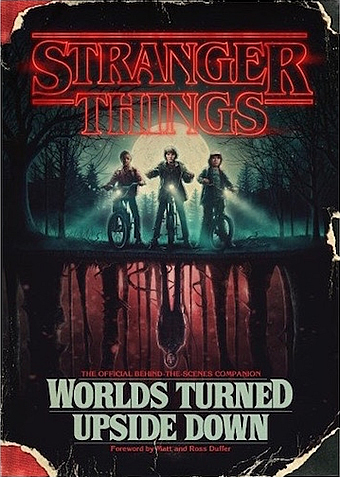
BOOK REVIEW #30: STRANGER THINGS: WORLDS TURNED UPSIDE DOWNPosted on 18 Oct 2019 |
Genre: Action/Comedy
Director: Elizabeth Banks
Cast: Kristen Stewart, Naomi Scott, Ella Balinska, Elizabeth Banks, Djimon Hounsou, Noah Centineo, Sam Claflin, Patrick Stewart
Runtime: 1 hr 59 mins
Rating: PG13 (Some Violence and Coarse Language)
Released By: Sony Pictures
Official Website:
Opening Day: 14 November 2019
Synopsis: Director Elizabeth Banks takes the helm as the next generation of fearless Charlie’s Angels take flight. In Banks’ bold vision, Kristen Stewart, Naomi Scott, and Ella Balinska are working for the mysterious Charles Townsend, whose security and investigative agency has expanded internationally. With the world’s smartest, bravest, and most highly trained women all over the globe, there are now teams of Angels guided by multiple Bosleys taking on the toughest jobs everywhere.
Movie Review:
Lest we be accused of being sexist, let it be known that we had really wanted to like this latest reboot of ‘Charlie’s Angels’. Scripted and directed by Elizabeth Banks, it is a genuinely earnest attempt at reinventing a franchise which had been less about female empowerment than about male escapism. Yet despite her best intentions as zeitgeist of the current #MeToo social milieu, it is a plodding, thuddingly dull, effort with few laughs and even fewer thrills, and likely to leave you feeling utterly indifferent.
To Banks’ credit, she has made a couple of nifty upgrades to the series template. Instead of simply being the second-in-command to Charlie in the Townsend Agency, Bosley is now a rank for the highest-in-charge of the bureaus which the Agency has established all over the world (hence opening the door for future spin-offs), thus setting the stage for what would be a crucial element in the plot involving the retirement of the previous Bosley (Patrick Stewart). In his place is Banks’ herself, who chooses not only to guide the action from behind-the-scenes but also in front of it.
As a former Angel-turned-Bosley, Banks leads a team comprising Sabina (Kristen Stewart), a Park Avenue rich kid who did not want to be fated to the life she had been given, and Jane (British newcomer Ella Balinska), a former MI-6 agent who decided she no longer wanted to work for the Government. Their mission is to protect the brilliant young scientist Elena (Naomie Scott), who is motivated by her conscience to expose the deadly potential of her company’s latest invention named Calisto – which she discovers, can be weaponised to generate an electro-magnetic pulse enough to kill a person within close range.
Not only does her snivelling boss (Nat Faxon) not want that disclosed to their company’s chief investor Alexander Brok (Sam Claflin), he is more than willing to sell the device(s) to a mysterious buyer, who has in turn engaged a professional hitman (Jonathan Tucker) that will put the Angels’ ass-kicking training to good use. Their cat-and-mouse game brings them from Rio to Hamburg to Berlin to Istanbul and finally to London, ensuring that the globe-trotting element in such espionage films remains very much intact. And thankfully too – for the change in location actually compensates somewhat for the underwhelming action.
In fact, that description is already being kind to how lifeless the action is. Right from the opening act where Sabina and a fellow Angel go up against the bodyguards of a rich and powerful embezzler in a sting operation, it is apparent that the choreography needs more work, the cinematography doesn’t quite know how to bring the audience into the scene, and the editing is just all over the place. These same faults perpetuate throughout each and every one of the film’s subsequent set pieces, all of which suffer from varying degrees of incoherence, monotony and sheer tedium.
It doesn’t help that the humour, which is intended to fizz up the action, also falls way short of being witty. You can tell that Banks had intended to go for a tone that is fairly light, yet serious enough in its portrayal of ‘girl power’ to ensure we take it seriously, but the jokes are simply too forced or too arcane (like its ‘Birdman of Alcatraz’ joke which many, like Elena in the movie, will struggle to comprehend). At least the two earlier McG movies didn’t try to pretend that they were anything more than frivolous entertainment; here, the strain of trying to be pulpy yet compelling shows, and Banks never quite finds the right balance to make it work both ways.
Perhaps the only thing she does get right is in casting Stewart, Balinska and Scott as the next-generation of Angels. Stewart gives her best shot at the comic asides and drive-by zingers, and manages an endearingly goofy presence despite the script doing little justice to her character. Together though, there is palpable chemistry among the trio, and their raw energy compensates for the material’s lack thereof, both in terms of plotting and execution.
So indeed, we had much wanted to like this latest version of ‘Charlie’s Angels’, but we were honestly left deeply wanting. You’ll wish Banks had a better handle on the comedy, the action, and the balance between them; you’ll wish she’d figured out how to make the characters more than caricatures of empowerment; and you’ll even wish she’d tone down the flag-waving on feminism, as much as that is her objective. And with flavourless pop songs as well as in-your-face product placement, we’d much prefer the trashy pleasures of the earlier McG movies than this bland, boring and bumbling misfire.
Movie Rating:


(Aside from the casting, there is little else in this feminist-driven reboot of 'Charlie's Angels' that works)
Review by Gabriel Chong
SYNOPSIS: Wayward Prince Hal must turn from carouser to warrior king as he faces hostilities from inside and outside the castle walls in the battle for England.
MOVIE REVIEW:
If you’re going to be a purist about Shakespeare’s source material, then you should probably avoid ‘The King’, which takes significant creative liberties with the Bard’s history plays – ‘Henry IV, Part 1; Henry IV, Part 2; and Henry V’. But those looking for a compelling period epic need not be deterred, for writer-director David Michôd and co-writer Joel Edgerton have fashioned a gripping story about kingdom politics; more specifically, their story revolves around the machinations which conspired to legitimise the young King Henry V’s unexpected ascent to the throne, following the death of his father and the notable rift between father and son which was never reconciled.
Those familiar with the story will know that Prince Hal was toxically estranged from King Henry IV (Ben Mendelsohn) – on one hand, Hal was perfectly content to carouse in the lower-class tavern of London’s Eastcheap quarter with his pal Sir John Falstaff (Edgerton), and did not care to see his father even while the latter was ill and dying; on the other, King Henry IV so loathed his eldest son Hal that he had declared the younger brother Thomas to be king. Unfortunately, having inherited his father’s appetite for war, Thomas soon dies in battle in Wales, despite Hal’s best advice to not follow in their father’s footsteps.
Upon Hal’s coronation as King Henry V, the Dauphin of France (Robert Pattinson) sends him a child’s ball as a present, and though urged by his Ministers to regard it as an insult, Hal refuses to be goaded into war. That changes when the Dauphin purportedly sends an assassin to kill him, which leads Hal to agree with the counsel of his Chief Justice (Sean Harris) to respond with force. Hal pleads with Falstaff to lead his army into war, partly given the latter’s experience with the battlefield, and partly because he is suspicious of the agendas of each and every one of the palace officials who now surround him day in and day out.
The piece de resistance is the Battle of Agincourt, where Hal found himself outnumbered and outpositioned by the French but eventually through strategy and grit managed to bring the latter to their knees. That victory is credit to Falstaff too, who had foreseen how he could use the elements to their advantage. It is thrillingly staged, but never such as to glamourise the messiness of war; and the lead-up to that shows how King Henry V found himself confronted with his own impulses as he struggles to find the right response to a series of setbacks, including the French’s ambush and beheading of an English child within the advancing party.
It is King Henry V’s coming-of-age which forms the backbone of the character development behind this adaptation, and Timothée Chalamet is absolutely magnificent in the role. Proving himself yet again to be a whipsmart actor, Chalamet keenly portrays the disdain which Hal feels towards the throne as a result of his resentment towards his father, his struggle to define his espoused pacifism amidst the advice otherwise from his court as well as the apparent provocations by the French, and his maturation both on the battlefield and back in the palace from having fought and won a war on his own leadership. Edgerton and Harris are strong supports in their respective roles as Hal’s counsel, but it is Chalamet who holds the film throughout with his nuanced portrayal of the titular character.
At more than two hours long, ‘The King’ never feels like a drag thanks to Michôd’s expert direction; as with ‘Animal Kingdom’ and ‘War Machine’, Michôd is in full control of the mise-en-scene here, slowly and confidently building up the events leading up to the pivotal Battle of Agincourt. Michôd also finds firm support in composer Nicholas Britell's stirring orchestral score, cinematographer Adam Arkapaw’s mud-splattered palette and editor Peter Sciberras’ firm pacing. As a period epic, it is rich and sumptuous all right, and in a different era, this would certainly be the sort of picture which is positioned for awards-season attention in the cinemas.
So even though it takes significant liberties with the Bard’s work, these are sophistically taken and ultimately reinforce what both Michôd and Edgerton have to say about the corrupting influence of the institutions of power. There is of course contemporary relevance to the story, and without any bias for either side of the political spectrum, has clear parallels with a certain idealistic American President whose policies never did speak as loudly as his ideals. Yet you don’t need to get the subtext in order to enjoy ‘The King’, which engrosses from start to finish and reverberates with the star charisma of Chalamet; as long as you’re prepared to put aside your literary trappings, you’ll find a story of impressive scale and resonance that is nothing short of majestic.
MOVIE RATING:
Review by Gabriel Chong
SYNOPSIS: An incisive and compassionate portrait of a marriage breaking up and a family staying together.
MOVIE REVIEW:
You may think from its opening that you’re in for a love story – what with the husband-and-wife couple Charlie (Adam Driver) and Nicole (Scarlett Johansson) taking turns to enumerate the other’s good qualities – but you’ll soon realise that both are simply doing their homework for a divorce mediation exercise.
Oh yes, ‘Marriage Story’ is perhaps more accurately a divorce story, seeing as how it deals with the separation of Charlie and Nicole who have been married 10 years and share an eight-year-old son named Henry (Azhy Robertson). After watching the then young and up-and-coming Charlie perform at a play, Nicole had fallen in love with him, and decided to forgo her promising Hollywood career to pursue theatre in New York. Now, Charlie is the director of an avant-garde company whose production of ‘Electra’ is Broadway-bound, while Nicole is part of the same company and his long-time leading lady.
Yet Nicole is hardly satisfied with the state of their marriage – not only does she miss her hometown of Los Angeles, she finds her own creative instincts stifled by Charlie’s artistic ego. So when she lands the lead role of a TV pilot shooting in LA, she grabs the opportunity to move back with Henry. Charlie is obviously displeased with her decision, and yet because he is unable to comprehend just how she has been feeling all this while, he is also unable to understand just why she would give up the troupe for a TV project that is no more than an environmental dystopian piece of cheese.
For the first hour, writer-director Noah Baumbach illustrates the push-and-pull between Charlie and Nicole as they navigate this newfound territory in their married life. While she is clear why she had initiated the separation, it is not so easy or straightforward to just erase away 10 years together, and there are simple yet significant moments which show just how much their lives have been intertwined. On the other hand, Charlie thinks at first that they can go on pretty much like before, but with each flight to-and-fro New York and LA, as well as every concomitant hotel stay, realises that the life he had grown too self-absorbed in is slowly but surely slipping away.
As should be the case for such stories, the best parts in ‘Marriage Story’ are the small day-to-day moments that resonate like real life, including an extended sequence showing how being able to celebrate Halloween twice with either parent separately isn’t as fun as it sounds. Most significantly, these details are observed with both humour and heart by Baumbach, and played beautifully by Driver and Johansson as they traverse through anger, confusion, insecurity and vulnerability. Both their characters will inevitably feel the rug being pulled from underneath their feet, and both actors deliver sharp yet sensitive performances.
Baumbach’s screenplay is a work of true art, especially as it traverses from domestic drama to legal procedural. Much as both had earlier agreed to keep the lawyers out, Nicole upsets that understanding by hiring the high-powered attorney Nora (Laura Dern), leaving Charlie little choice but to engage his own litigator. Though at first Charlie goes with the avuncular Bert (Alan Alda), Charlie eventually decides that he needs a stronger counsel to fight his case against Nora, though bringing the high-priced barracuda Jay (Ray Liotta) only makes things even more complicated for both of them.
Here, Baumbach takes aim at the legal industry set up to exploit such unfortunate circumstances, especially as each and every single detail of Charlie and Nicole’s is twisted by their respective lawyers to give them the best possible advantage at securing a ‘win’ over the other, even if it means distorting and disfiguring little foibles that used to be appreciated as each other’s eccentricities. It is as absurd as it is tragic, and watching how the proceedings take their toll on both of them is truly heartbreaking; in particular, an unannounced visit by Nicole to Charlie’s place in LA ends up with a scorched-earth argument which makes for one of the most emotionally charged scenes you’ll see this year.
Whether and how much Baumbach has based the film on his own divorce from actress Jennifer Jason Leigh is anybody’s guess, but there is no doubt that ‘Marriage Story’ is one of, if not his best, films. There is no melodrama here, just an honest, raw and incisive account of how two people united by the bond of marriage can survive an uncoupling driven through the grind of courtroom divorce proceedings, while shielding their child from the fallout. Driver and Johansson are perfectly cast next to each other, supported by a first-rate supporting ensemble, and they elevate what is already first-rate material into the most poignant story of a marriage you’ll see this year.
MOVIE RATING:
Review by Gabriel Chong
Genre: Romance
Director: Kim Han-kyul
Cast: Kim Rae-won, Kong Hyo-jin, Kang Ki-young, Jung Woong-in, Jang So-yeon
Runtime: 1 hr 49 mins
Rating: NC16 (Some Sexual References)
Released By: Golden Village Pictures and Clover Films
Official Website:
Opening Day: 31 October 2019
Synopsis: Jae-hoon (starring KIM Rae-won), whose heart is broken by his ex-girlfriend, wakes up in the morning hungover as always, to find that he talked on the phone with someone unknown last night for more than two hours. Soon, he figures out that someone was Sun-young, his colleague from work, who just joined his team and introduced herself to him before less than 24 hours! Meanwhile, Sun-young (starring Kong Hyo-jin) is undergoing a messy breakup. At her very first day at work, she bumps into Jae-hoon while bad-mouthing her unfaithful boyfriend to break up with him! Despite the fact that they have come to learn more about each other’s love affair than work, this subtle tension and awkwardness between them did not last long. They start to pit against each other in a short time. Even while calling one another pathetic and ridiculous, they still care about each other deep in their heart…
Movie Review:
This Korean movie may be a romantic comedy, but the scene that stands out isn’t anything lovey dovey. In fact, it is something that we are very prone to – replying in wrong group chats.
The scene goes like this. In an office setting where everyone is typing furiously away, you’d think they are working their asses off. Guess what, thanks to the popularity of instant messaging software, the office rats are busy gossiping away with each other. Alas, one person accidentally types in the wrong group chat and badmouths a co worker, and the results are hilarious to watch, but painful to experience if it happened to you.
The premise is simple. A man got dumped by his fiancé and has been broken hearted for a month. A woman broke up with a boyfriend who cheated on her. The two individuals begin talking, and in a convenient plot development, they turn out to be colleagues. Having to spend time working together, they naturally have lots to talk about. This leads to a romantic relationship between two people who are trying to recover from previous relationships.
The story really isn’t anything to shout about. The filmmakers probably know that, and have incorporated relatable incidents like flirting on text messages, office gossip and chance meetings to beef up the substance. While some of these sequences work throughout this 109 minute movie, the pacing still feels sluggish overall, and you can probably think of a few scenes to cut if there was a prize for trimming the film to 90 minutes.
Thankfully, the two main leads Kim Rae Won and Kong Hyo Jin are good looking (as they should, since they are starring in a Korean rom com), and they have a nice on screen chemistry that makes you believe these two characters are desperately finding someone to seek solace. Kim may look boyish, but his portrayal of a man who is serious about work and relationships is spot on. Kong, who looks a tad too serious at times, has a memorable scene where she gets back at her colleagues for gossiping about her past. It is a scenario you wish would never happen to you.
Elsewhere, supporting characters are caricatures you know in real life: the boss who tries too hard to bond the team, the gossip mongers whom you want to get news updates from but must be careful not to get too close to, and the fun loving bunch who always blends nicely with the team. The cast delivers comedic performances that help keep the lightweight atmosphere going.
While this film is nothing groundbreaking when it comes to the rom com genre (there are no out of this world plot twists, and everything plays out quite expectedly), it does end on a nice note of slight ambiguity instead of painting a picture perfect conclusion about people who have gone through failed relationships. And it might make you think about your own experience, and how you eventually dealt with it.
Movie Rating:
(As expected, this is a predictably agreeable Korean rom com starring good looking people)
Review by John Li
|
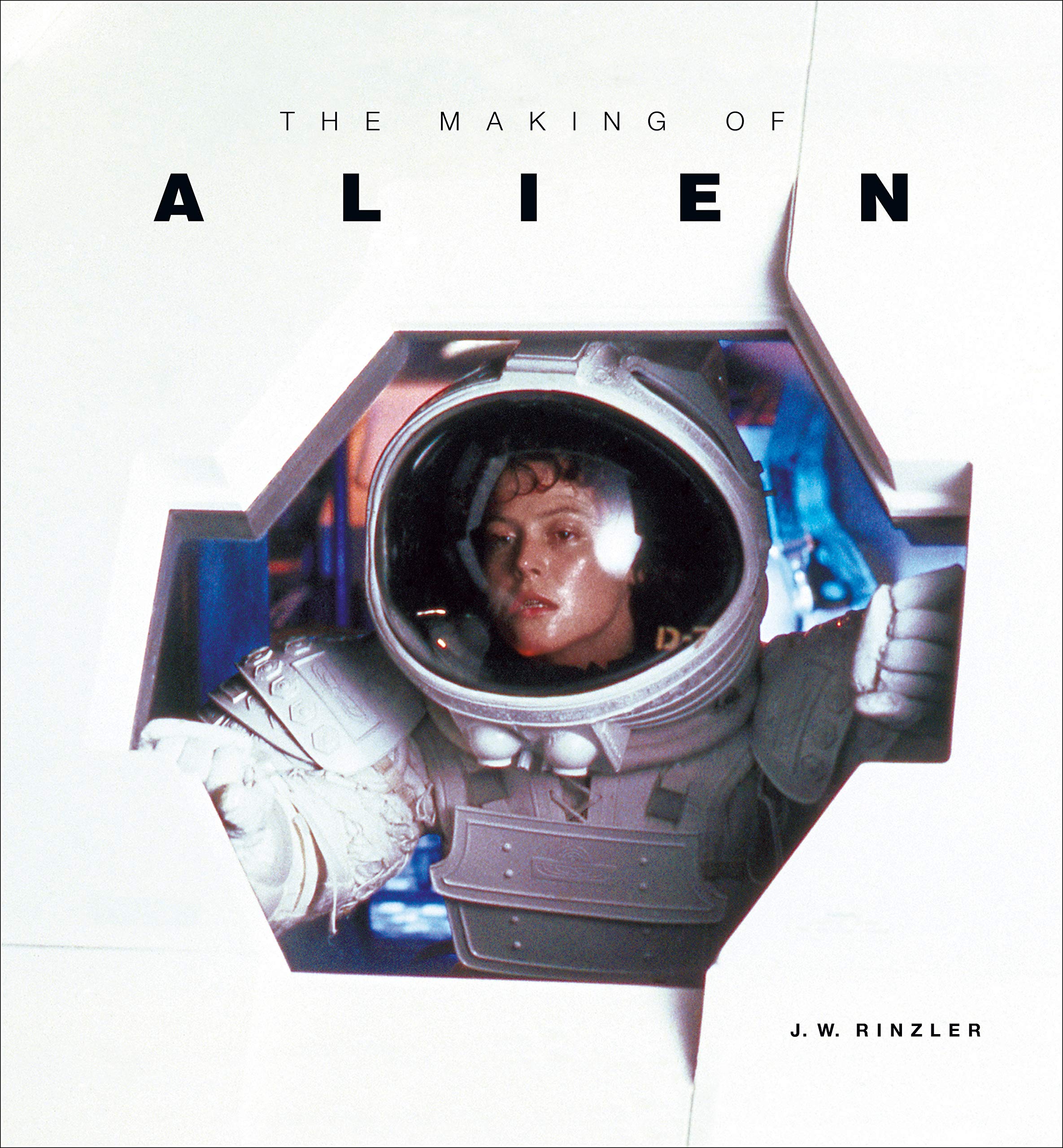
BOOK REVIEW #31: THE MAKING OF ALIENPosted on 31 Oct 2019 |
Genre: Drama/Comedy
Director: Johnnie To
Cast: Jacky Heung, Keru Wang, Shao Bing, Bin Zi, Kelly Yu, Emotion Cheung
Runtime: 1 hr 58 mins
Rating: PG13 (Some Violence)
Released By: Shaw Organisation
Official Website:
Opening Day: 14 November 2019
Synopsis: This is the story of two dreamers - boxer Tiger (starring Jacky Heung) and Cuckoo (starring Keru Wang) - and the encounter that changes their lives. They met at a MMA tournament program and Tiger was tasked to collect Cuckoo’s debt. An odd relationship begins and they soon rely on each other. To pay off her debts, Cuckoo joins the talent competition Songstress. After settling her debts, Tiger decided to quit boxing and chase after his dream. However, he realises that boxing was an inseparable part of him and returns to the ring. With his boxing match and Cuckoo’s final round of Songstress only a city block apart, their dreams brought them back together again…
Movie Review:
Chasing Dream marks the first collaboration between legendary HK director Johnnie To and his frequent working partner, Wai Ka Fai, after an absence of five years. It’s not simply just a case of absence making the heart fonder but more of making up for the star-studded yet shallow, romantic sequel to Don’t Go Breaking My Heart.
Jacky Heung (League of Gods), son of China Star Entertainment’s boss, Charles plays Tiger, a budding MMA fighter who meets a budding singer, Cuckoo (Keru Wang from Youth). With risk of losing his eyesight and a ruptured liver, Tiger dreams of opening a hotpot restaurant in the future. But for now, he is making ends meet by being a debt collector as well. And on one occasion, he stumbles upon Cuckoo, one of his debtors who happened to be lost in her life but yet dreams of being a singer. Thus this unlikely pair turned from enemies to friends and as a result, drawing audiences along their bittersweet journey in life.
It’s a classic act of cute boy meets girl setup no doubt, something which To and Wai first did with Turn Left, Turn Right. But with Chasing Dream, the two dynamic filmmakers decide to pepper the story with a bit more. A lot more in fact. Not satisfy of being just a sports movie about MMA, it’s also a movie about reality singing competitions. Predictably, a love affair involving two young aspiring individuals. And the biggest takeaway of all, it’s a motivational movie that talks to the current generation of young people- “Never ever give up on your dreams” even though you might helmed from the lowest rungs of society.
As the title hints you, Chasing Dream is basically a mash-up of Step Up, Unbeatable and the duo’s very own Throwdown. It contains elements that audiences are so familiar with yet never a minute of boredom is conjured from the two seasoned filmmakers. There are some light-hearted, slapstick humour that pokes fun at the countless singing competitions on the market which only To can pull off with great aplomb in the first half of the movie. Then comes the obligatory misunderstanding that drifts the couple apart followed by a predictable ending of sorts.
And inbetween there is a subplot that involves Tiger’s boxing master, Ma Qing (Shao Bing), an ex-medallist winner who has now fallen on hard times. To revive his struggling boxing school, Ma decides to take on a deadly opponent for the money. Tiger, who can’t bear to leave his aging master in the lurch chooses to fight again in the end. Cuckoo on the other hand has to deal with her ex, a scumbag who cheated her money and music only to become a successful idol. With the help of a veteran singer, can Cuckoo make a comeback in her life and will she reunite with Tiger?
Although it does periodically delivered a few noteworthy scenes, those heading into Chasing Dream expecting a hard-hitting MMA-style action drama will be sorely disappointed as this is not entirely the focus here. No surprise at all, it’s one half of a movie that is filled with pop music (mostly covered by Taiwanese singer Erika Liu) and dance moves. Nonetheless, narratively speaking, it’s still somewhat enjoyable owing to the tremendous chemistry shared by Jacky and Keru Wang. Jacky might not possessed the typical good looks of a Chinese idol but he is extremely likeable portraying the gluttonous, neurotic and wild Tiger and Keru Wang delivers a moving believable performance as the talented yet struggling Cuckoo.
It’s hard not to love a movie like Chasing Dream though despite some slight awkward mishap like the undercooked subplots. Obviously it’s not a genre adorned by hardcore fans of Milkway who is known for their testosterone-filled action stuff and mostly feature regular cast members as the leads. But watching veterans liked To and Wai venturing out of their safety zone to produce a movie that caters to the younger crowd is somewhat affable and heartwarming.
MOVIE RATING:
(A crowd pleaser that targets the young audiences - a surprise from Johnnie To and Wai Ka Fai, not forgetting a great leading man in the form of Jacky Heung)
Review by Linus Tee
Genre: Horror/Thriller
Director: David M. Rosenthal
Cast: Michael Ealy, Joseph Sikora, Jesse Williams, Nicole Beharie, Ritchie Coster, Guy Burnet
Runtime: 1 hr 29 mins
Rating: M18 (Sexual Scene and Coarse Language)
Released By: Shaw Organisation
Official Website:
Opening Day: 21 November 2019
Synopsis: JACOB’S LADDER is a modern day re-imagining of the 1990 supernatural thriller. Years after the tragic death of his brother in Afghanistan, Jacob Singer is finally getting his life back together. He has a beautiful wife, a new baby and a successful career as surgeon in a VA hospital. When a strung out vet approaches him and tells him that his brother is actually alive, Jacob’s life starts to unravel. He begins hallucinating, believes he is being followed and becomes paranoid about the truth of what really happened to his brother. When he discovers that his brother is alive and addicted to an experimental street drug, he gets pulled into an underground world he can’t get out of.
Movie Review:
When you are pushed to revisit a horrible part of your life after some years, what would you do? Would you let go of the past, or will you relive it to find proper closure?
Jacob’s Ladder is about a surgeon who seem to have it all, but is also recovering after the death of his brother during a mission in Afghanistan. The pain of the death is revisited when it was made known to him of his brother being alive and, being unable to stop thinking about it, decides to find his brother, only to realise that he has been alive all these while and that he was on an experimental drug that was supposedly curing post traumatic stress disorder but has really bad side effects. Jacob eventually tried to get into the bottom of things, only to realise that he was not able to get out of the ‘sinkhole’.
Although Jacob’s Ladder is technically a remake of the 1990 version of the same title, it has a vastly different plot and setting that is more relevant in today’s time and age, with differences including getting it during the 2000s instead of 1970s. And it does look quite exciting and intriguing from its trailer.
Sad to say, the film did not live up to its trailer, nor did it live up to its [slight] marketing hype.
For one, the film suffers from a lack of focus in the direction that it wants to take. The viewers are first shown a flashback of the horrific past that is supposedly the ‘basis’ of the film for a good 5 minutes. And then, the viewers are reeled into a much happier moment with the antagonist leading a more comfortable life, only to be pushed back into darker moments with random people hinting to the antagonist about the survival of his brother and when the brother was found, the viewers are then brought into a whirlwind of mad rapid random scenes for a good one hour, eventually led to a twist in the film that was actually predictable and obvious.
Riding on that, the actual plot is extremely simple, which would have been okay if the producers were able to get around and add elements into the film that could beef up the content. But instead of making it digestible to the viewers, it was decided that random jumpy and unrelated scenes, a few unnecessary jump-scare tactics and the ‘mysterious’ story-telling would help to make the film more ‘interesting’, which obviously does not sit well with a generally ‘hungrier’ and savvier crowd, thus leading to a storyline with multiple plot holes, unrealistic continuous scenes and unanswered questions.
With this, viewers are left to feel confused, as they are unable to decide if the film is a horror film, a psycho thriller or a film about sibling rivalry, as it has all of these inside the film, but it does not seem to gel well together. All these are also peppered with weird, unrelated visual effects, which may have been placed to create the effect of ‘drug usage’, however it was not executed well enough.
The only redeeming factor were the cast, whom were pleasant and delivered well with much conviction. Kudos to the main lead actors, Michael Ealy and Jesse Williams, who were able to get into their character with much ease and made it as realistic as possible, mixing the right amount of dramatism and on-screen charisma.
But even the cast could not save the film from its dismal and lacklustre delivery.
Eventually, what could have possibly been an amazing psycho thriller filled with action became a real bore that fell short of expectations and became not only predictable but plain outlandish.
It had its chance at being amazing and impactful. Yet, it did not seize the opportunity and eventually, like the side effects of the drugs, Jacob’s Ladder lost its clarity and focus, leading it to an awful mess of a film.
Movie Rating:
(A simple and predictable thriller masked by dramatically unrealistic scenes. It is not really worth your time)
Review by Ron Tan
Genre: Horror/Thriller
Director: Kim Ji-han, Juhn Jai-hong
Cast: Lee Chae-young, Jo Jung-min, Choi Cheol-ho, Kan Mi-youn, Han Se-min, Kim Si-woon
Runtime:1 hr 33 mins
Rating: R21 (Sexual Scene & Some Violence)
Released By: Golden Village Pictures and Clover Films
Official Website:
Opening Day: 26 November 2020
Synopsis: Online fashion model Hyo-jung faces the imminent threat of being unemployed because of the younger and more fashionable generation coming after her. While relying on surgical procedures and treatments, Hyo-jung hears about a mysterious yoga class that helps make perfect body shape from her old high school classmate, Ga-young. Hyo-jung eventually attends the yoga class with three classmates: Mi-yeon, a boxer who failed to keep her body fit, Ji-won, who has an unstable mental condition, and Ye-na, a movie star who is morbidly obsessed with her appearance. Meanwhile, police start to investigate the enigma behind this yoga class after finding out that a murder in the neighbourhood was committed by a woman named Bo-ram a former student of the yoga class...
Movie Review:
With all the societal pressure to look good in South Korea, especially when set against such demanding standards, it’s always heartening to see the media tackling the topic. And what better way to exemplify obsession than with the horror genre? Similar to this year’s earlier Beauty Water, the chase for attractiveness leads only to gory ends in The Cursed Lesson.
Unfortunately, this rendition falls a little short of its intended impact, when it sacrifices emotional investment for showy displays and genre cliches.
Commercial model Hyo-jung (Lee Chae-young) is feeling every bit the effects of aging, even though she remains extremely attractive with huge limpid eyes and an elegant mien. She is losing jobs to younger models and her doctor is limiting her treatments, citing health reasons and hinting of an addiction.
Through a meeting with an old classmate, Hyo-jung finds out about a premium and exclusive yoga studio, Kali, that practises a transformational method that literally reshapes one to an enviable new self. You can imagine how things go, given that promise.
When the model arrives and meets three other participants, she begins to also experience strong hallucinations of serpents and a particular diseased friend. Between the disturbing visions and the incredible effects of the kundalini yoga she takes on, Hyo-jung finds herself torn between her options to stay or to flee.
I could see how the premise of The Cursed Lesson could make for a striking story and visuals that can play with body horror and a little erotic flair, but the first peters out due tto the lack of actual depth in plot or characterisation, and the second comes across less artistic than exploitative.
Maybe this has to do with the fact that there are two directors (Kim Ji-han and Juhn Jai-hong) credited for the production. Although it’s unlikely they did this in isolation of the other, the film does oddly feel like it flits between two treatments.
This is especially apparent between the two halves of the feature, with the earlier segment carefully set-up andd the second half devolving into a psychotic frenzy. The story suffers a bit of the bipolar traits the lead exhibits, occasionally more sinister when tapping into the practise of the studio, but mostly wasting time on repeated shots of Hyo-jung looking haunted and waking up frightful. Worst thing is, she never really does anything concrete resembling logic, and so she becomes more of a tool to lead the viewer through the many oddities of Kali yoga studio.
A huge missed opportunity is in her interactions with her classmates. One a kickboxing athlete, one a fading actress, and another a timid ingenue, they would have provided good dynamics for exploration if only the directors had chosen to go that way. With how it was presented, each character, including the staff at the school, become more individualistic placeholders than actual players moving the story along.
And though not many horror titles boast of a good ending, this one was so sudden and convenient, it just left me scratching my head.
Movie Rating:
(Tackling a worthy message but failing to really make a point, this twisty tale fails to move)
Review by Morgan Awyong
Genre: Drama
Director: Anthony Chen
Cast: Yeo Yann Yann, Koh Jia Ler, Christopher Lee, Yang Shi Bin
Runtime: 1 hr 43 mins
Rating: M18 (Mature Theme & Sexual Scene)
Released By: Golden Village Pictures
Official Website:
Opening Day: 28 November 2019
Synopsis: The movie follows the plight of Ling, a Chinese-language teacher, whose marriage and school life are fraying apart because she is unable to bear a child. But an unlikely friendship with a student helps her reaffirm her identity as a woman.
Movie Review:
Treading the line between artistic integrity and commercial viability is never easy - especially so in our tiny isle of Singapore. With Wet Season, Anthony Chen establishes his quiet finesse in creating films that strikes a chord with the audience, but bags critical mention and awards to boot.
Chen’s sophomore feature has recently picked up six nominations from this year’s prestigious Golden Horse Awards. They include nods for Best Narrative Feature, Best Director, Best Leading Actress (Yeo Yann Yan), Best Supporting Actor (Koh Jia Ler and Yang Shi Bin), and Best Original Screenplay. If you find familiar names in there, you’ll recognise both Yeo and Koh from Chen’s Ilo Ilo, although one of them has grown up considerably and has a screen presence to reckon with.
Highlighting his gift of astute observations once again on celluloid, Wet Season begins as a marriage crisis between a barren couple, but spins into a wayward relationship in the second half - one that will no doubt have some shifting in their seats. On the surface, it plays out a middle-aged woman’s crumbling identity in the face of social pressure, yet Chen’s expert maneuverings has weaved in points on cultural decay, gender roles, familial bonds, social classism, and of course, the nature of love.
It is the last that unfurls the most beautifully - Yeo’s outward fragility is a dying bloom, that awkwardly embraces Koh’s brash and unexpected innocence - desperate and parasitic, yet nurturing in its own way. And while there are a few moments overplayed to illustrate this theme, the final moments between the two are satisfying and heartfelt - a hallmark of Chen’s continuing ode to humanity, and another showcase of his strength in telling moving, universal stories.
Because even if both films were set in Singapore and revealed an authentic cross-section of locals, Chen has managed to create them as broader tapestries that speak to a global audience, without resorting to exaggerated colloquialism, overt signalling or placing a dragon playground in the middle of it all.
But enough of praise for the young talent, much can be said for the cast as well. Yeo has essentially cornered the market on playing mature women with complex inner psyches, where even banal actions are infused with her brand of rich emotional depth. Under her control, Ling is believably a Chinese language teacher pushed to succumb to her own needs.
Koh shows incredible maturity for all of his 18 years of age, and balances out veteran Yeo in every aspect with Wei Lun - an admirable feat. There’s enough rebelliousness and cheek to reason his abrupt actions, yet a tenderness that keeps us all endeared to his antics. His lines, mostly kept simple, have a loaded quality about them. Even a casual, “Would you like some water?” becomes a moment of gold.
A special mention too to Yang, who plays the stricken elderly father-in-law. The theatre veteran demonstrates his incredible reach in every frame, and his small role contributes heft and an important layer to Ling’s emancipation.
Chen has certainly struck gold with his casting, and Wet Season shuffles them around like an expert croupier, every move anticipated and full of objectivity. If something can be said that makes the film a little less than sublime, it would be the pacing - especially in the middle portion. With so much themes at hand, it can be forgiven that Chen got a little indulgent, and the husband Andrew’s (Christopher Lee) arc becomes a little flat while being stretched.
But Chen’s masterful grasp of the medium is never boring. Much of this has to do with his intimate understanding of its many avenues of expression. Through the space in-between he builds up a luxurious mood, one most poetically expressed in a blink-and-you’ll-miss-it moment, when Ling’s red pen leaks ink exactly between the words “teacher and student”.
Watch as most of the characters seek shelter in their little pockets from the rain, playing out their stories with earnesty, then be there to witness their wonderful liberation, only realised fully when they step out into the torrent.
Movie Rating:
(If you enjoyed Ilo Ilo, Chen’s latest feature holds much of the same - in all the best possible ways. Strong control, powerful performances, and moving storytelling)
Review by Morgan Awyong
| « Prev | 398 | 399 | 400 | 401 | 402 | 403 | 404 | 405 | 406 | 407 | 408 | Next » |
Most Viewed
No content.