


SYNOPSIS: Set in and around the corridors of power, Bodyguard tells the story of David Budd (Richard Madden), a heroic, but volatile war veteran now working as a Specialist Protection Officer for London’s Metropolitan Police Service. When he is assigned to protect the ambitious Home Secretary Julia Montague (Keeley Hawes), Budd finds himself torn between his duty and his beliefs. Responsible for her safety, could he become her biggest threat?
MOVIE REVIEW:
This isn’t usually the space for TV series, but ‘Bodyguard’ is excellent enough for us to make an exception.
Already the most watched BBC drama since 2008, ‘Bodyguard’ is now available to stream on Netflix, and proves to live up to its hype and more. Much more, in fact, because you’ll instantly be caught up in its intriguing, intoxicating, and often pulse-pounding, mix of politics, treason and terrorism.
‘Game of Thrones’ alum Richard Madden stars as police sergeant David Budd, who in the opening episode of this six-parter, is on a train to London Euston with his two children when he suspects something awry might be going on. Soon enough, he is confronting would-be female suicide bomber Nadia (Anjli Mohindra) in one of the train’s toilet cubicles, and carefully coaxes her not to go ahead with her mission, even as counter-terrorism forces are scrambling outside to contain the situation. Most of the first episode happens on the train itself, but director Thomas Vincent (who also helms the next two episodes) screws the suspense so tight you’ll be relieved when it finally lets you catch your breath.
As David returns home with his kids to his wife Vicky (Sophie Rundle), you’ll sense that something else is not quite right with his marriage and with the man himself. It only becomes clearer slightly more than halfway through the extent of his disorder, but suffices to say that the post-Afghan war vet had not entirely left the war behind him. His heroic act earns him the assignment of protecting Home Secretary Julia Montague (Keeley Hawes), a hawkish politician who is in the throes of pushing through a controversial piece of legislation RIPA-18 that has become the magnet of much public criticism.
Within the Home Ministry, Julia has also earned the ire of her Minister of State Mike Travis (Vincent Franklin) and the police counter-terrorism head Anne Sampson (Gina McKee) for allowing the Security Service (led by Stuart Bowman’s Director General of MI5 Stephen Hunter-Dunn) to interfere in the investigation into Nadia and her associates, which both opposed to it fear will only become the norm if the Security Service is given enhanced powers under RIPA-18. It doesn’t help that the police end up almost bungling another terrorist act, and that Julia is herself targeted by a sniper on a roof, ostensibly confirming her suspicions that the police are either incompetent and/or compromised.
Amidst all this, the clandestine relationship between David and Julia complicates matters even further. Following her near-miss with death, Julia gets intimate with David, and the couple soon spend many more nights together in each other’s embrace, even while maintaining their professional distance in the day. But both find themselves guilty of withholding information from each other – Julia knows she was aware that the school which David’s children attend could very well have been the target of the terrorists’ next attack, and true enough the foiled attack happens just metres away from the school entrance; on the other hand, David is recruited by his boss Chief Superintendent Lorraine Craddock (Pippa Haywood) and Commander Sampson to report on Julia’s whereabouts, especially any contact she has with the Security Service.
It’s a byzantine plot all right, but creator/ writer Jed Mercurio keeps all the pieces spinning impressively, leaving you guessing at every turn just who is responsible for what. Oh yes, everyone has their own agenda here, and it’ll be a mistake to think that a single actor or group of actors is behind each and every one of the incidents. Not to forget too that the politics isn’t simply within the Home Ministry between the police and the Security Service, but also between Julia and the Prime Minister, to whom she is possibly launching a leadership challenge for No 10 Downing Street. And without giving anything away, you should also prepare yourself for a literally explosive twist midway into the series, which dramatically alters the course of all involved in the latter half of the season.
If the first three episodes are styled as political drama, then the latter three unfold like an investigative procedural, which director John Strickland takes over the reins of without ever losing momentum or pace. Besides the aforementioned characters, other key supporting ones thrown into the mix include a shadowy Intelligence operative known as Longcross (Michael Schaeffer), two counter-terrorism detectives Deepak Sharma (Ash Tandon) and Louise Rayburn (Nina Toussaint-White), Julia’s ex-husband and Member of Parliament Roger Penhaligon (Nicholas Gleaves) and organised crime leader Luke Aikens (Matt Stokoe). Until you stop to take stock of all these characters do you realise just how intricate and elaborate this web of conspiracies Mercurio has woven, and it is to his credit that you never feel lost within at any point.
Notwithstanding, the show belongs in large part to Madden, who skilfully adjusts his performance from restraint to rage over the course of the six episodes. There is palpabl sexually charged chemistry between him and Hawes, which makes his transformation in the latter half of the season even more believable. But even though much of the story unfolds through Budd’s perspective, it’s probably more accurate to think of the entire series as an ensemble, comprising notable contributions from a who’s who of British TV acting talent. Whether intentional or not, there is a very strong female presence here, and it is a sheer delight watching McKee and Haywood spar with Franklin, Bowman and Gleaves.
There is plenty to enjoy and savour about ‘Bodyguard’, which taps into our zeitgeist of divisive politics, terrorism and controversial national security laws. Even though we’ve seen many US TV shows tap into similar themes, there is still something truly propulsive, gripping and stimulating about this latest iteration, which explains just why it has become a cultural phenomenon within the UK. Sure, some of the specific political references may seem a little less familiar, but we’re very sure the appeal of this densely but tensely plotted political/ terrorism drama extends way beyond its home shores. Like we said at the start, this usually isn’t the space for a mini-series like this, but the fact that we’ve made an exception shows just how blown away we were by this, and we dare say this is well worth the time you would otherwise have spent on three other less outstanding cinematic features in the theatre.
MOVIE RATING:

Review by Gabriel Chong

|
IN MEMORIAM...Posted on 04 Nov 2018 |
Genre: Horror/Thriller
Director: Brett Pierce, Drew T. Pierce
Cast: John-Paul Howard, Piper Curda, Jamison Jones
Runtime: 1 hr 36 mins
Rating: NC16 (Horror & Violence)
Released By: Shaw Organisation
Official Website:
Opening Day: 13 August 2020
Synopsis: A rebellious teenage boy, Ben, visiting his father for the summer makes a haunting discovery -- A malevolent fiend from the deep woods stalks the young family living next door. Taking ahold of the mother, the creature begins playing a terrifying game of house while preying upon the local children. Alone in his suspicions, Ben launches into a perilous crusade to stop the wretched evil before it consumes everything he holds dear.
Movie Review:
At first glance, there may be more than a whiff of familiarity about ‘The Wretched’.
The premise of something suspicious going down in a neighbour’s house feels like it was ripped from ‘Disturbia’, and the scenes of watching the couple in the property getting it on in their bedroom with a pair of binoculars seems right out of ‘Rear Window’.
Concomitantly, the idea of a demon who has taken root (we mean this as literally as you can imagine) in a small seaside community and takes over the bodies of its victims sounds like it was taken from a number of ‘80s body horror films.
Yet, despite the familiar set-up, this sophomore effort from sibling directors Brett and Drew Pierce (who go by “the Pierce brothers”) is a lean and effective genre exercise, fusing borrowed formulas into a fun creature horror with a number of standout sequences.
The story follows teenager Ben (John-Paul Howard), who has come up to spend the summer living and working for his dad at the marina. Right from the beginning, Ben is curious about the hipster couple renting the house next door, and he is further piqued when he glances a hideous-looking creature on their porch one evening. That creature ends up taking hold of the woman Abbie, which terrifies her grade-school-aged son Dillon (Blane Crockarell).
At first, Ben’s key interest is to protect Dillon, but when the latter disappears after being led into the woods by Abbie, Ben sets out to find out just what evil lies beneath his neighbour’s dwelling. That will soon set him on a race against time to save other children from suffering the same fate, including fellow marina co-worker Mallory’s (Piper Curada) younger sister Lily (Ja’layah Washington).
In just over one-and-a-half hours, the movie unfolds at a brisk pace, building gradually towards an exciting finish that sees almost everyone involved – from Ben’s dad Liam (Jamison Jones), to his girlfriend Sera (Azie Tespai) and even the local police – swept up in the malevolence. True to its title, the finale reveals just what happens to the victims which are dragged into the ground by the hag-like witch, trapped in a tangle of roots and dirt with memories of their existence erased.
To their credit, the Pierce brothers hardly resort to a cheap jump scare, relying instead on good old-fashioned suspense to keep you hooked. Even though its elements may be derivative, there is polish in the execution, ably assisted by Conor Murphy’s creepily effective camerawork and Devin Burrows’ unsettling score. You’ll appreciate too the eerie epilogue that suggests the worst ain’t yet over, teasing a sequel that you’ll find yourself excited to see.
So even though it is indebted to Hitchcock, Spielberg and ‘80s horror such as ‘Invasion of the Body Snatchers’, ‘The Wretched’ is an intriguing horror that grows more riveting as it reveals more and more of the terror bewitching the inhabitants of the sleepy seaside town. It may be familiar, but that doesn’t mean you won’t enjoy the ride with its twists, chills and atmosphere.
Movie Rating:

(Fashioned out of familiar elements, this creature horror is nonetheless a fun and frightful genre exercise that relies on good old-fashioned atmosphere and suspense to keep you hooked)
Review by Gabriel Chong
Genre: Drama
Director: Lee Jae-kyoo
Cast: Yoo Hae-jin, Cho Jin-woong, Lee Seo-jin, Yum Jung-ah, Kim Ji-soo, Song Ha-yoon, Yoon Kyung-ho
RunTime: 1 hr 55 mins
Rating: PG13 (Some Sexual References)
Released By: Golden Village Pictures
Official Website:
Opening Day: 22 November 2018
Synopsis: Someone suggests a game during a dinner party with life-long friends to put their cell phones on the table and share everything from phone calls to texts and emails. As secrets from the friends who started the game for fun become exposed, the night spirals out of control beyond prediction and imagination!
Movie Review:
The smartphone changed our lives forever. And as a character remarks in Intimate Strangers, it’s like a black box of its owner, full of messages, emails and media they’ve collected. So is it any surprise that the content within might shock some of our closest friends or loved ones?
An adaptation from the Italian original, Perfect Strangers in 2016, Lee Jae-Kyoo’s Korean remake is a compelling piece full of deft acting, while investigating the belief that we have three lives: one public, one private, and one secret. At a housewarming party, a group of 40-year-long schoolmates and their wives play a risky game, by revealing all the notifications and putting all calls on speaker at the dinner table. Not a good idea? We hear you.
The dramedy is an excellent showcase of what happens when a director keen on nuance fulfills it with a talented ensemble. Because the veteran actors here floor their performances. Furtive glances, meaningful looks, timed misdirections, all come alive in the apartment. There are displays of innuendo and habit that only decades-long friends can develop, and Lee’s teases out every ounce of chemistry from his cast.
With a short backstory, we quickly get up to speed on the relationship between the men when they were boys. Then we shuttle forward to present day, where the wives are brought into the group. Lee does a nimble job of establishing the set-up with just the right amount of script. By the time we begin dinner, we already know that psychiatrist wife Ye-Jin (Kim Ji-Soo) can’t control her own daughter, lawyer Tae-Soo (Yu Hae-Jin) has a strained intimacy with wife Soo-Hyun (Yum Jung-Ah), while entrepreneur Joon-Mo (Lee Seo-Jin) is sexually ravenous with his (Song Ha-Yoon).
All seems well until Ye-Jin suggests the game, and it’s not as straightforward a downward slide as a jaded audience might think. There’s comedic turns when an ex texts that he has problem with an erection, and another when bachelor Young-Bae’s (Yoon Kyung-Ho) text tone is surprisingly cutesy. There are also sincere revelations like the one Seok-Ho (Cho Jin-Woong) has with his wife while cleaning a spill. But it is the juicy scandals that draw the audience in, like illicit gossip, and challenges a different mix of relationships within the group.
Intimate Stranger does well in weaving the interpersonal network between husbands, wives, and the friendships they have in an inclusive manner. It plays up the dynamics of reunions to a fine point, where not everyone present might necessarily like each other and yet act like they do. And at these occasions, even without the mobile game, topics can easily go rogue and stir up hurt or suspicion.
Writer Bae Se-young has done an admirable job of steering away from a preachy script. The tone never becomes too judgemental, as characters are truly realised with all-too-human faults like contradictions and hypocrisy. As characters like Tae-Soo and Joon-Mo are shady with their loyalty, their exaggerated ire with their own spouse speaks more about their guilt than their spouses. But most enjoyable to watch is Soo-Hyun’s spiral from obliging housewive to desperate lover. Yum’s performance is hard to look away from.
As the film hurtles its way to the end, there’s more than a few tricks up its sleeve. With all the drama, one might think it’s going to be capped with a straightforward disaster or fairytale ending. But the final portion is unexpected and satisfyingly reflective, and raises more questions about how much we need to know about our loved ones, and if full-disclosure is an idealism that does more harm than good.
Movie Rating:
(Reunion goes to ruin over a game of smartphone truth-or-dare. The film brings to surface human relationships and contemplates the value and role of honesty)
Review by Morgan Awyong
Genre: CG Animation
Director: Chris Renaud
Cast: Kevin Hart, Tiffany Haddish, Harrison Ford, Patton Oswalt, Eric Stonestreet, Jenny Slate, Lake Bell, Hannibal Buress, Nick Kroll, Dana Carvey, Ellie Kemper, Pete Holmes, Garth Jennings, Bobby Moynihan
Runtime: 1 hr 26 mins
Rating: PG
Released By: UIP
Official Website: www.thesecretlifeofpets.com
Opening Day: 30 May 2019
Synopsis: Illumination’s tenth animated feature, The Secret Life of Pets 2, is the highly anticipated sequel to the 2016 comedic blockbuster that had the biggest opening weekend ever for an original film, animated or otherwise. Packed with Illumination’s signature irreverence and subversive humor, this new chapter explores the emotional lives of our pets, the deep bond between them and the families that love them, and answers the question that has long intrigued every pet owner: What are your pets really doing when you’re not at home?
Terrier Max (Patton Oswalt) is coping with some major life changes. His owner (Ellie Kemper) is now married and has a toddler, Liam. Max is so worried about protecting the boy that he develops a nervous tic. On a family trip to a farm, Max and mutt Duke (Eric Stonestreet) encounter canine-intolerant cows, hostile foxes and a terrifying turkey, all of which only elevates Max’s anxiety. Luckily, Max gets some guidance from veteran farm dog Rooster (Harrison Ford, making his animated-film debut), who pushes Max to ditch his neuroses, find his inner alpha, and give Liam a little more freedom.
Meanwhile, while her owner is away, plucky Pomeranian Gidget (Jenny Slate) tries to rescue Max’s favorite toy from a cat-packed apartment with a little help from her feline friend, Chloe (Lake Bell), who has discovered the joys of catnip. And crazy-but-cute bunny Snowball (Kevin Hart) gets delusions of grandeur that he’s an actual superhero after his owner Molly starts dressing him in superhero pajamas. But when Daisy (Tiffany Haddish), a fearless Shih Tzu, shows up to ask for Snowball’s help on a dangerous mission, he’ll have to summon the courage to become the hero he’s only been pretending to be.
Can Max, Snowball, Gidget and the rest of the gang find the inner courage to face their biggest fears?
Movie Review:
At the core of Illumination’s ‘The Secret Life of Pets’ is an intriguing proposition – do we really know what our pets are up to when we’re out of the house? But an idea does not a movie make, and the team behind ‘Despicable Me’ and ‘Minions’ found themselves stuffing it full of frenetic visual gags that frankly stretched the potential of its set-up beyond 90 minutes. Surprisingly – and thankfully – the same creative team which returns for the inevitable sequel has decidedto opt for a far less frenzied pace this time round, choosing wit and heart over plain hijinks to fashion an equally cheery but far less exhausting experience.
Once again leading the motley pack of pet creatures, who mostly live on different floors in a New York City apartment building, is the Jack Russell terrier Max (Patton Oswalt, replacing comedian Louis C.K. for obvious reasons). Max’s narration at the beginning highlights how his life has changed ever since his owner Katie (Ellie Kemper) meets Chuck; not only do they get married, they will soon have a baby son named Liam, whom Max is initially wary of but will grow overprotective over. His anxiety causes him to develop the habit of scratching himself vigorously, so much so that Katie schedules Max a visit to the vet that he emerges from with a cone around his neck.
Max’s coming-of-age journey happens over an out-of-town family holiday to a farm, whereupon he meets the tough sheepdog Rooster (Harrison Ford, perfectly gruff) and eventually learns a thing or two about himself. We won’t spoil what Max goes through in order to get over his own worries, but we will say that Max’s story is told with much charm and pathos. In between imparting a couple of lessons about helicopter parenting, director Chris Renaud throws in a number of laugh-out-loud moments, including one with a cow who rejects her stereotype with spot-on sarcasm and another with a turkey of stalkerish tendencies.
Unlike its predecessor though, the plot here avoids cramming too much into an otherwise more elegant storyline; instead, writer Brian Lynch injects two other subplots clearly intended for comedy and action. The former sees the fluffball Pomeranian Gidget attempting to retrieve her beau’s favourite toy from a cat lady’s apartment, a mission that has her learning how to behave like a cat from the cantankerous tubby tabby Chloe (Lake Bell). That montage where she has to resist her canine instincts, as well as the quest itself which finds great fun in the red dot of a laser pointer, is enough to justify the presence of this segment, which is the relatively stronger one out of the two fillers.
In contrast, the other featuring manic bunny Snowball’s (Kevin Hart) superhero adventure to rescue a timid snow tiger cub from the clutches of a diabolical Russian circus owner (Nick Kroll) feels utterly throwaway. Even with newcomer Tiffany Hadish as a fearless Shih Tzu, the humour in these scenes is lacking, such that they exist only to keep the less attentive kids in the audience happy; in particular, so that the film concludes on an action-packed note, the extended finale sees all of these pets come together to help Snowball free the cub from on board a moving train. The kids will probably enjoy the excitement, but we frankly prefer the sweet, silly and heartwarming parts that come before.
Still, there’ll be no disagreement about the quality of the animation, which is as outstanding as anything you’ve seen from Illumination. Like the first movie, Renaud chooses a bright, sparkling and radiant colour palette to keep the mood light, jovial and buoyant. The detail on each of the animals is amazing, not only in how natural their fur and movements are, but also how these movements are employed with utter subtlety to convey their very human personalities. It is too easy to take these achievements for granted, but you’ll only need to look outside the Minion house to appreciate their technical accomplishments here.
Compared with the original, we must say we prefer this sequel, which tones down the mania for clever laughs and gentle sentimentality. Those here just for the adventure will be satisfied with a fair number of energetic set-pieces, and those looking for more will likely take to the less hectic but wittier moments. As a summer popcorn movie for the whole family, it’s perfectly pleasant entertainment that both parents and kids alike can share in, with an epilogue of the weird and wacky antics our real-life pets can get up to which will surely resonate with anyone who owns/ ever owned a pet.
Movie Rating:
(Less frantic but wittier and more heartwarming, this sequel will win you over with its sweet, silly and delightfully amusing moments)
Review by Gabriel Chong
|
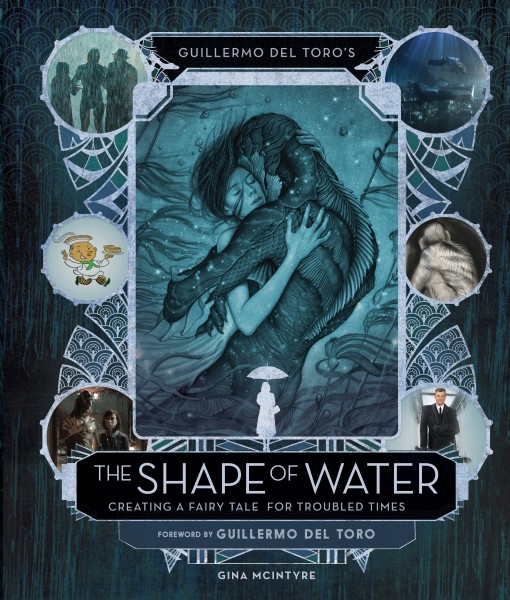
BOOK REVIEW #27: GUILLERMO DEL TORO'S THE SHAPE OF WATER: CREATING A FAIRY TALE FOR TROUBLED TIMESPosted on 12 Nov 2018 |
SYNOPSIS: An African American father struggles with race relations in the United States while trying to raise his family in the 1950s and coming to terms with the events of his life.
MOVIE REVIEW:
If you want to watch a heartfelt drama with powerhouse performances, then look no further than this 2016 title, Fences directed and starring Denzel Washington.
Based on the late playwright August Wilson’s Pulitzer Prize-winning play, Fences while mostly retaining the basic structure and story of the original play lacks the conventional big screen treatment despite being a theatrical release. This is definitely a double-edged sword particularly for viewers who are not accustomed to this sort of interpretation.
Washington’s third directorial effort has him playing Troy Maxson, an illiterate waste collector who rises to be a garbage truck driver, a first in 1950s Pittsburgh. No, Troy Maxsondoes not have a specific set of skill nor is he a masked crime-fighting vigilante at night. Maxson is simply an ordinary hardworking African-American striving to be a responsible husband and providing for his wife (Viola Davis) and teenage son, Cory (Jovan Adepo).
But as the movie goes, we learnt that Maxson is not all sunny day perfect. He has another son from his previous marriage who always pop by to ask him for a loan. He is strict and demanding with Cory, stopping him from joining the NFL after a bad experience with football in his younger days. He has a quick temper, occasionally turning up intoxicated and constantly finding fault with the Grim Reaper. Later on, he has a third child as a result of an affair with a woman he met in a bar.
Without fanciful cinematography and set designs, Fences on the surface looked like a tragic, provocative melodrama that seems to be shot overnight on somebody’s backyard. In actual fact, Fences depicts the lives of real people regardless of their religion or skin colours despite having an all-black cast. Adultery, father-and-son issues and social economics are not restricted to one particular race or color.The movie covers a lot of themes and topics and you have to play close attention to the often rapid-fire exchanges between the on-screen characters.
While the well-told, complex drama might not be appreciated by many, there’s never a doubt that Denzel Washington and Viola Davis are absolutely brilliant in their performances. The over two hours drama is a testament to their acting credibility and a worthy reference material for all inspiring acting individuals.
MOVIE RATING:
Review by Linus Tee
SYNOPSIS: In 14th-century Scotland, Robert the Bruce claims the crown and leads a fierce uprising to win back the country's independence from English rule.
MOVIE REVIEW:
Mel Gibson’s Oscar-winning ‘Braveheart’ told the story of Scottish independence hero William Wallace fighting the English army, and if you ever wondered what happened afterwards, we finally have an unofficial answer in David Mackenzie’s historical drama ‘Outlaw King’.
Whereas ‘Braveheart’ portrayed Robert the Bruce as a calculating but gutless politician who ultimately abandoned Wallace’s cause, ‘Outlaw King’ restores him as the venerated 14th-century freedom fighter who rallies the disparate clans within Scotland against the oppression of English rule. No matter that it is made by and is therefore debuting on Netflix, it is an epic in both size, scale and scope, and is often bold, bloody and brutal enough to match Gibson’s predecessor.
Mackenzie’s ambition is evident from the get-go, opening with an impressive 9-minute single-take shot which introduces Robert the Bruce (Chris Pine) pledging fealty to King Edward I of England (Stephen Dillane) along with the rest of the Scottish lords, then engaging in a bit of swordplay with the King’s ill-tempered son Prince Edward II (Billy Howle), and finally being handed a warning as King Edward unleashes a massive flaming projectile from a gigantic catapult towards the castle of one of his enemies whom he refuses to accept the surrender of.
It is a dizzying take all right, a demonstration of not only the extent of the choreography but also the achievement of top cinematographer Barry Ackroyd’s immersive camerawork, that brings gritty authenticity to Mackenzie’s lived-in world of mud, blood and viscera.
For those familiar with Scottish history, the rest of the film covers the roughly three-year span up until the Battle of Loudon Hill, and not the crushing victory at Bannockburn. Even so, there is a lot of ground for Mackenzie, who co-wrote the script with Bash Doran and James MacInnes, to cover in Bruce’s rise to power as the King of Scots and the subsequent guerrilla rebellion he leads against England that his subjects are sick of.
Among the long and complex chain of circumstances are the public display of the mutilated body of fugitive rebel Wallace, the death of Bruce’s Solomonic father afterwards, his subsequent disembowelment of the leader of a rival clan John Comyn (Callan Mulvey) who threatens to betray him, and his absolution by the clergy of the Church of Scotland on condition that he accepts their coronation as the King of Scotland.
Oh yes, it is clear that Mackenzie has done plenty of detailed research for the movie, aiming as with his other movies for the highest degree of verisimilitude. It is to his credit that what could have been the material for a miniseries still flows coherently and propulsively as a two-hour feature, with some of the weighty exposition in the first half-hour purportedly trimmed down from the version which premiered at Toronto.
Still, we’d wish Mackenzie had given the latter half of the movie more breathing space, so that we’d better appreciate how Bruce grew his army from 50 to 500 men as these rebels went from castle to castle killing the English soldiers stationed there, taking whatever they could and burning everything else to the ground. As it stands, these conflagrations feel a bit rushed, though you’d likely remember one chapel ambush designed specifically to allow Aaron Taylor-Johnson’s land-robbed noble James Douglas to unleash his pent-up rage against the occupying English forces.
But Mackenzie saves the best for last, and the climactic battle is as bloodcurdling and violent as it gets, what with pikes skewering rows of men on horseback, plenty of hacking and slashing within knee-high mud bogs that the larger English army is ill-prepared for, and a mano-a-mano showdown between King Bruce and Prince Edward II that doesn’t end well at all for the latter. It is a rousing finish all right, and firmly rooted in today’s ‘Game of Thrones’ zeitgeist of grimy period warfare.
Thankfully, the film never loses sight of its titular hero even when it aims for spectacle. Buoyed by an excellent performance by Pine, King Bruce remains an intimately felt character throughout the movie, convicted of his ideals of independence for his people but conflicted by the costs to those closest to him. Wisely, Mackenzie draws you into King Bruce with a tender and affecting love story between him and his English bride by arranged marriage Elizabeth de Burgh (Florence Pugh), that will also win you respect and admiration for both Bruce and his queen consort.
Though arriving more than two decades after ‘Braveheart’, ‘Outlaw King’ is a fitting complement that completes the story of Scotland’s medieval battle for independence. Don’t listen to critics who have called this empty or meandering, neither of which in our opinion are accurate descriptions of a movie that belongs to be seen as much on the big screen as on Netflix. We enjoyed every minute of this handsomely mounted drama that also marks a triumphant homecoming for Scottish director Mackenzie, and we think you would too this beautiful epic that deserves as wide an audience as ‘Braveheart’..
MOVIE RATING:
Review by Gabriel Chong
|
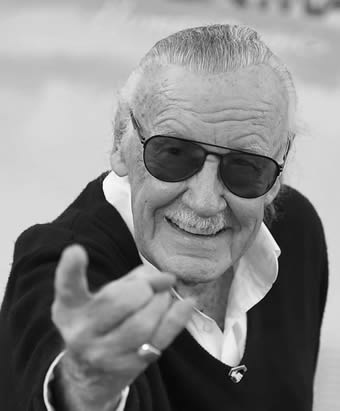
STAN LEE (1923 - 2018)Posted on 13 Nov 2018 |
Genre: Sci-Fi
Director: Daniel Roby
Cast: Romain Duris, Olga Kurylenko, Fantine Harduin
RunTime: 1 hr 29 mins
Rating: PG (Some Intense Sequences)
Released By: Shaw Organisation
Official Website:
Opening Day: 22 November 2018
Synopsis: When Paris is submerged in a strange mortal fog, survivors take refuge on the city’s upper floors and rooftops. Without news, electricity, water or food, one small family struggles to survive the catastrophe. But as the hours pass, they are forced to face reality: rescue teams aren’t coming. If they hope to make it out alive, they will have to risk going out into the fog.
Movie Review:
This movie is believed to the first French disaster film ever made, and we were expecting a big budget production with massive special effects showcasing the talent of genius CG artists, spectacular sets with collapsing buildings and helpless human beings running for their lives, as well as a painfully predictable storyline.
We are pleasantly surprised that it is not the case. Luckily for viewers, the movie which opened the French Film Festival this year upholds the reputation of European productions: films from that part of the world display more class and thought process. Yup, we are pleased to report that you won’t be getting Michael Bay or Roland Emmerich treatment.
The story sees Mathieu (the very charming Roman Duris) coming home to Paris from Canada, where he was sourcing for a cure for his daughter who is suffering from an immunodeficiency disorder that requires her to live in a technologically advanced plastic bubble. When a mysterious mist consumes Parisfrom underground, his daughter ironically becomes the safest person in the country. Together with Anna (the very gusty Olga Kurylenko), Mathieu has to find a way to stay alive with the mist rising up the buildings while figuring out how to retrieve the young girl.
Unlike most other disaster movies we are familiar with, this film directed by Daniel Roby chooses to focus on the dynamics between the characters instead of throwing one CG laden scene at audiences after another. There is only one big scale sequence of clouds of brown fog emerging from the ground early in the film, and the plot follows the two adult protagonists fighting for their survival thereafter. This is definitely nothing like The Day After Tomorrow (2004), 2012 (2009) and Independence Day: Resurgence (2016).
We are not suggesting that it is a dreary small scale film which isn’t worthy of a big screen treatment. There are some compelling scenes which see the characters trying to escape the deadly toxic cloud that keep you at the edge of your seats. This is only possible because you care about Mathieu and Anna, a result of good characterisation. To add to the human drama, there is an old couple who may remind you of your ageing parents. Their eventual fate may move you to tears.
Duris (All the Money in the World) delivers a fine performance as a caring father who is determined to make things work, no matter the cost. Kurylenko (Johnny English Strikes Again) holds her own ground as a woman who will not allow obstacles to stand in her way of survival and saving a loved one.
The 89 minute runtime also means that the film is tightly edited. Without giving too much away, the movie has a cleverly designed ending that will make you reflect on the essence of human existence. Some may see this film as a wake up call to the urban city’s increasing pollution, while others may simply regard it as a human drama with gripping emotions. Whatever the case, it is a refreshing change from the usual disaster flicks that do nothing more than deafen or numb your senses.
Movie Rating:
(The well paced and gripping human drama shows us what it is really like to race against the clock to fight for survival)
Review by John Li
| « Prev | 366 | 367 | 368 | 369 | 370 | 371 | 372 | 373 | 374 | 375 | 376 | Next » |
Most Viewed
No content.