

THE FURIOUS (火遮眼) (2026)
Genre: Action
Director: Kenji Tanigaki
Cast: Xie Miao, Joe Taslim, Yayan Ruhian, Brian Le, Yang Enyou, Joey Iwanaga
Runtime: 1 hr 54 mins
Rating: M18 (Violence and Gore)
Released By: Shaw Organisation
Official Website:
Opening Day: 11 June 2026
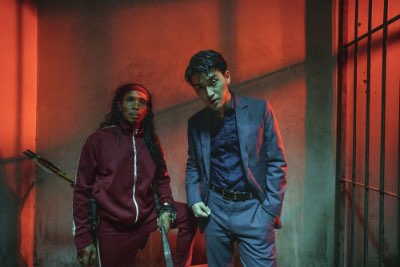
Synopsis: After the daughter of Wang Wei (Xie Miao) is kidnapped by a criminal network and he receives no help from the corrupt police, Wei sets out on a rampage to find her himself. His only ally is Navin (Joe Taslim) – a relentless journalist whose wife has mysteriously disappeared. Fueled by a furious vengeance, the unlikely duo ruthlessly fights against the kidnappers in this explosive martial arts showdown.
Movie Review:
Kenji Tanigaki’s The Furious is the kind of movie where the plot is really just the fuse. It is there to be lit, after which the whole thing becomes one long explosion of bodies, movement, impact and invention. There is a kidnapped daughter, a desperate father, a criminal syndicate, and a journalist with his own reasons for joining the chase. It is all familiar enough, but that is not a weakness so much as a declaration of priorities. Tanigaki is not trying to reinvent the revenge thriller. He is using it as scaffolding for what he clearly cares about most: action as pure cinema.
And on that front, The Furious is often breathtaking. The action is not simply the highlight of the movie; it is the movie. Everything else – narrative, character, dialogue, even emotion – exists to sharpen the next set-piece. That may sound like faint praise, but in this case it is the highest compliment. The film knows exactly what it wants to be, and it goes after that with such ferocious clarity that its thinness elsewhere hardly matters.
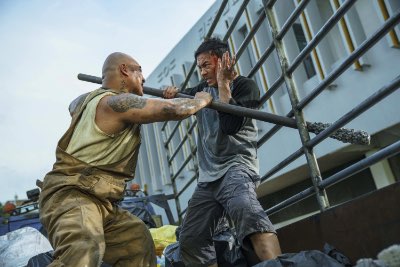
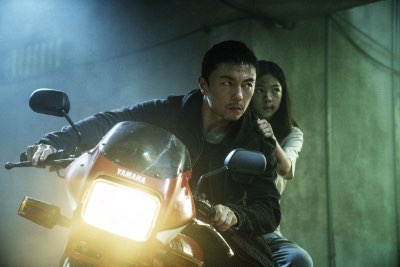
The early abduction of Rainy (Yang Enyou) sets the tone. Wang Wei (Xie Miao) is present as his daughter is taken, and the scene turns almost instantly from parental panic into full-bodied pursuit and punishment, what with Wei running after a truck in flip-flops, his feet increasingly battered, and engaging in a number of frantic skirmishes with the kidnappers. That is The Furious in miniature – simple feeling, pushed through extreme motion.
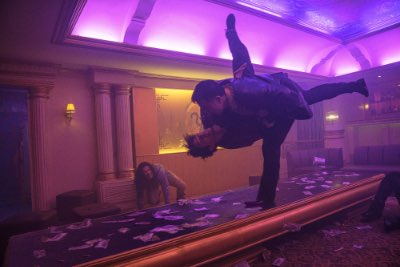
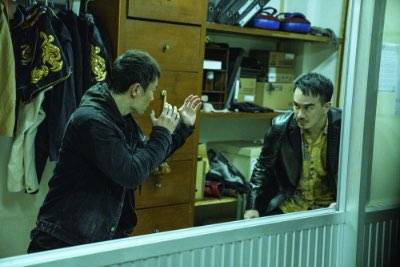
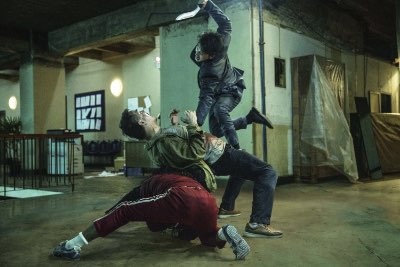
From there, Tanigaki keeps finding new shapes for violence. There is an early fight involving Matia (Navin’s wife) that functions almost like a starter pistol, throwing the audience into the movie’s rhythm before Joe Taslim’s Navin is pulled deeper into the story. There is a chaotic nightclub sequence that brings Navin properly into the proceedings, all bodies, noise and confusion, but still staged with enough clarity that the geography never collapses into mush. There are one-on-one battles, vehicle-assisted moments, and a wonderful sense that almost any object can be dragged into the choreography if Tanigaki looks at it for long enough.
That inventiveness is the movie’s great pleasure. At one point, the film apparently unveils something that has been described, very happily, as “bicycle-fu”: bicycles used less as props than as extensions of the fighters themselves. Elsewhere, bodies become architecture. Downed opponents do not simply fall; they pile up, get climbed over, or become part of the next movement. One especially memorable sequence has Wang Wei fighting two UFC-style opponents in an octagon before taking on a swarm of goons, the fallen eventually collapsing into a hill of beaten bodies. It is ridiculous, but it is also inspired.
The comparisons to The Raid, Ong-Bak and classic Hong Kong action are inevitable, and not misplaced. Like those films, The Furious believes that action can carry character, rhythm and emotion on its own. A punch is not just a punch; it is desperation, strategy, exhaustion, rage. A fall tells you what a monologue would only over-explain. Tanigaki’s gift is not just that he makes the hits look hard, though he certainly does. It is that he makes each fight feel like it is thinking on its feet.
The character work, by contrast, is elemental. Wei wants his daughter back. Navin wants answers. The villains are vile enough to deserve everything coming to them. This is not complex writing, but it is functional in the best sense. The simplicity keeps the emotional lines clean, so the action can remain direct and urgent. Xie Miao’s performance is built almost entirely out of physical resolve; Joe Taslim gives Navin a more verbal, investigative energy, while still holding his own when the movie throws him into the grinder.
And then comes the finale, which many have singled out as the film’s crowning achievement: a wild five-way showdown involving Miao, Taslim, Yayan Ruhian, Joey Iwanaga and Brian Le. One description frames it as a two-versus-two-versus-one melee that even begins with a five-way split screen; another simply calls it the moment nothing else in the film can top. That sounds about right. By then, The Furious has already escalated so many times that the climax has to become almost deranged to feel like a true final movement.
The film is not flawless. The dialogue is clunky, the plotting straightforward, and the emotional beats rarely have space to breathe. But to dwell too much on that is to ask The Furious to be a different movie. This is not a great drama with action scenes. It is a great action movie with just enough drama to keep the blood hot.
Ultimately, The Furious is a bruising, breathless reminder that screen combat can still astonish when it is staged with imagination, clarity and nerve. Its story is basic, its characters functional, and its dialogue secondary. But its action is alive – clean, creative, punishing and frequently jaw-dropping. In this movie, the action is not in service of the story. The story is in service of the action. And when the action is this good, that is more than enough.
Movie Rating:

(A bruising, breathless action showcase where Kenji Tanigaki turns a familiar revenge thriller into a jaw-dropping celebration of screen combat as pure cinema)
Review by Gabriel Chong
You might also like:

Movie Stills