

PARADISE LOST (실낙원) (2026)
Genre: Crime/Suspense
Director: Yeon Sang-ho
Cast: Kim Hyun-joo, Bae Hyeon-seong, Kim Jong-tae, Lee Hyun-kyun, Koo Kyo-hwan
Runtime: 1 hr 41 mins
Rating: PG13 (Some Violence and Disturbing Scenes)
Released By: Shaw Organisation
Official Website:
Opening Day: 5 November 2026
Synopsis: My son, who disappeared nine years ago, has returned. But this is not the boy that I knew. A bus carrying a group of children to camp vanishes. Only a few bodies are recovered before the case is cold-sealed. Among the grieving, So-young finds solace in reconnecting with her lost son, Sun-woo, through AR glasses. In the 9th year since his disappearance, the impossible happens: the real Sun-woo returns as an adult. But this shatters So-young's world once more—the real son is a cold stranger; the virtual son needs her more than ever. At the crossroads of loving guilt and manic salvation, she faces a devastating choice.
Movie Review:
Yeon Sang-ho’s Train to Busan (2016) was a breathless, emotionally engaging zombie thriller that barely gave viewers a moment to catch their breath, even as it tugged at their heartstrings. So those expecting another wild ride from the director’s latest work, Paradise Lost, may want to adjust their expectations. This is a very different beast altogether, favouring a slow-burning psychological drama over the breakneck pace of a zombie apocalypse.
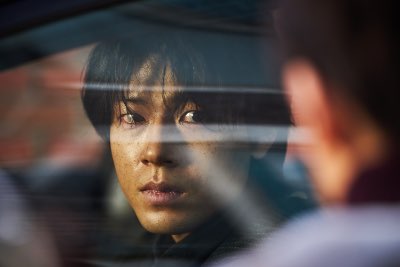
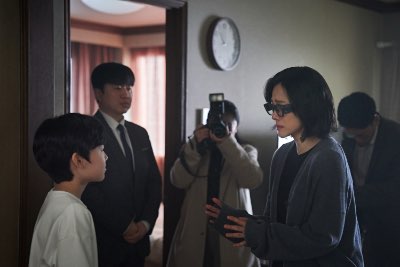
The story follows So-young (Kim Hyun-joo), whose young son Sun-woo disappears along with a school bus carrying children on a camping trip. Nine years later, still struggling with her loss, she finds comfort in an artificial intelligence programme that allows her to interact with a virtual recreation of her son as a young boy. Then, in a turn of events she could hardly have imagined, the adult Sun-woo (Bae Hyeon-seong) returns. Except he is no longer the innocent child she remembers. Instead, he is a cold and unsettling young man whose presence brings more questions than answers.
There is something particularly poignant about this premise in an age when artificial intelligence seems to be everywhere we turn. The possibilities are seemingly endless, and here, technology offers a grieving mother a way to hold on to someone she has lost. It is an emotionally appealing proposition, even if the person on the other end of that virtual interaction is ultimately a simulation.
The film explores a similar territory to Hirokazu Kore-eda’s Sheep in the Box (2026), with both films taking their time to examine the emotional implications of using technology to fill the void left by a loved one. Neither is in a hurry to get where it is going, and Paradise Lost is very much a slow burner.
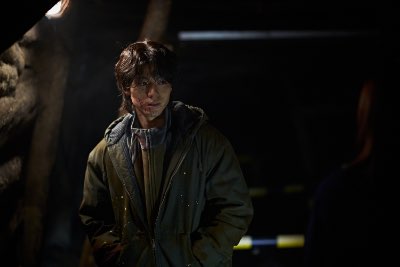
Things take a decidedly darker turn when the grownup Sun-woo comes home. Far from the adorable little boy his mother has been spending her days interacting with, this is a man with a menacing presence and an unsettling streak. There is something deeply disturbing about his behaviour, and the more So-young discovers, the harder it becomes to reconcile the person standing before her with the child she has spent nine years mourning.
One might question why So-young takes so long to confront the situation, particularly when some of Sun-woo’s actions would warrant a much firmer response in real life. Perhaps it is blind maternal love, or the desperate hope that the son she has finally got back can still be the boy she remembers. Kim gives the character an emotional vulnerability that makes her predicament understandable, even when her decisions can be frustrating to watch. Bae, meanwhile, makes for an unsettling presence, keeping audiences guessing about just how far his character is willing to go.
What makes Paradise Lost worth pondering is the uncomfortable questions it raises. If someone you loved came back into your life, only to turn out to be a completely different person, how far would you go to stand by them? Would your affection remain unconditional if their actions went against everything the law and your own moral compass stood for? And at what point does loving someone become an excuse for turning a blind eye?
Those looking for the adrenaline rush of Train to Busan may find this a rather subdued outing, but Paradise Lost offers something else: an examination of grief, identity and the complicated nature of unconditional love. Sometimes, the most frightening thing is not losing someone, but discovering that the person you have been waiting for is no longer the person you knew.
Movie Rating:

(An intriguing premise about AI, grief and identity loses some of its impact through its drawn-out storytelling, but still leaves some uncomfortable questions lingering)
Review by John Li
You might also like:


Movie Stills