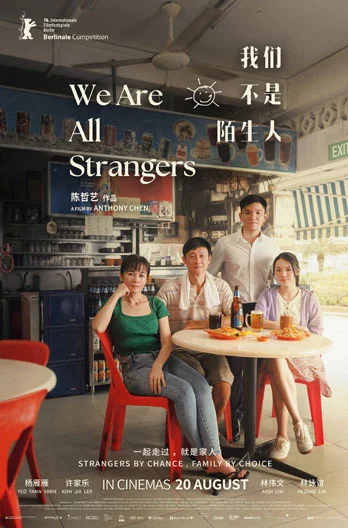


WE ARE ALL STRANGERS (我们不是陌生人) (2026)
Genre: Drama
Director: Anthony Chen
Cast: Yeo Yann Yann, Koh Jia Ler, Andi Lim, Regene Lim
Runtime: 2 hr 37 mins
Rating: PG13 (Some Coarse Language & Sexual References)
Released By: Golden Village
Official Website:
Opening Day: 20 August 2026
Synopsis: In contemporary Singapore, 21-year-old Junyang lives in the ease of youth while his father struggles to hold their modest life together. When Junyang’s relationship with his girlfriend takes an unexpected and life-altering turn, the young couple is forced to face the realities of adulthood far sooner than anticipated. At the same time, an exuberant woman enters his father’s life and heart, quietly reshaping the fragile balance between father and son. As both generations confront love, loss, and responsibility, they must redefine what family means – and learn to live with the imperfect bonds between those we are born to and those we choose.
Movie Review:
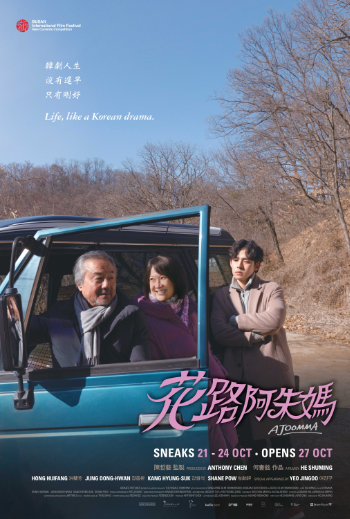
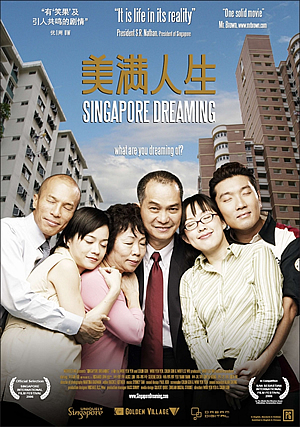
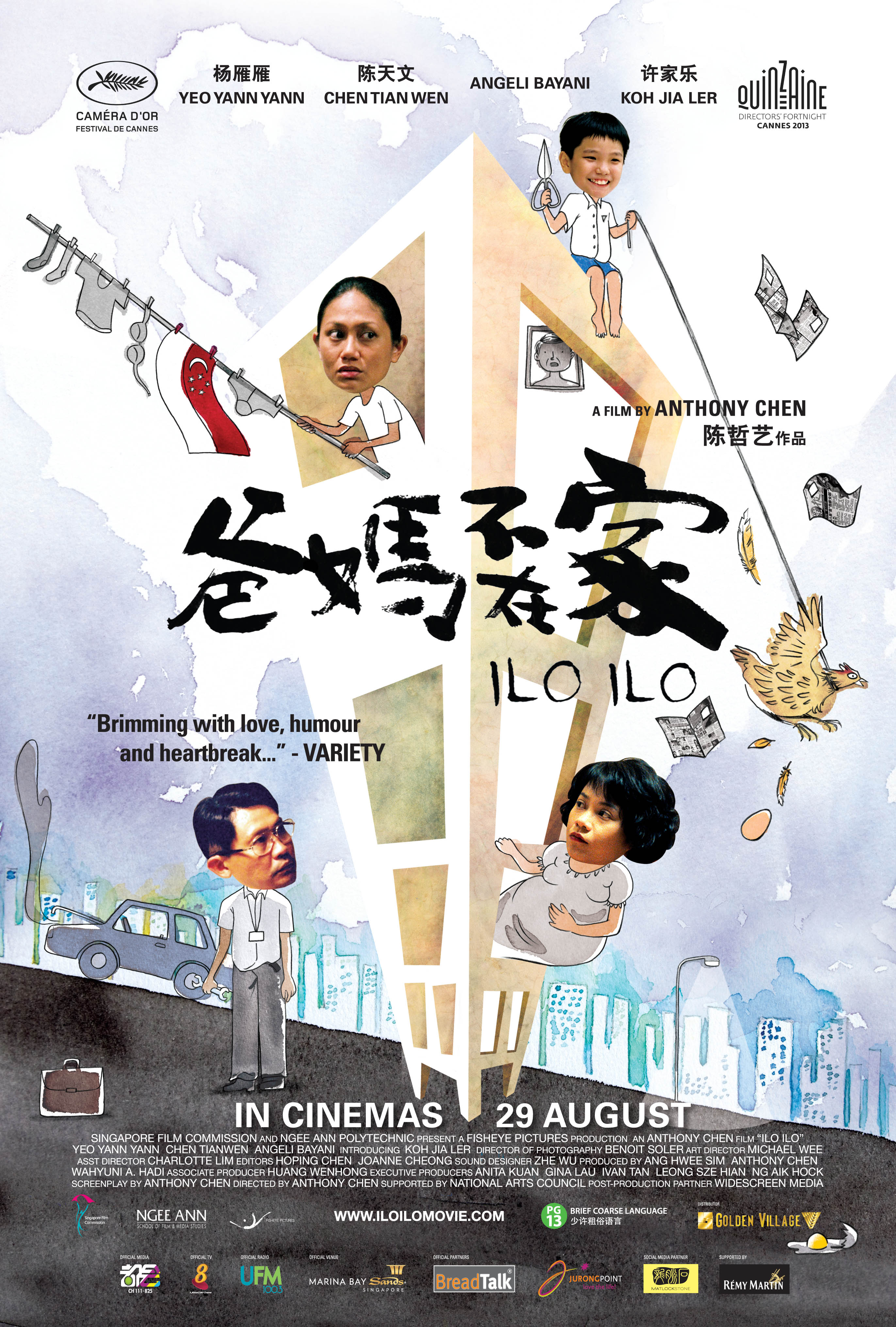
It is somewhat uncomfortable for us to say this, but we were a bit disappointed after watching Anthony Chen’s concluding film of his loosely connected ‘Growing Up’ trilogy. Each chapter has starred Yeo Yann Yann and Koh Jia Ler, and this time, they play stepmum and stepson in an unlikely family together with Andi Lim and Regene Lim.
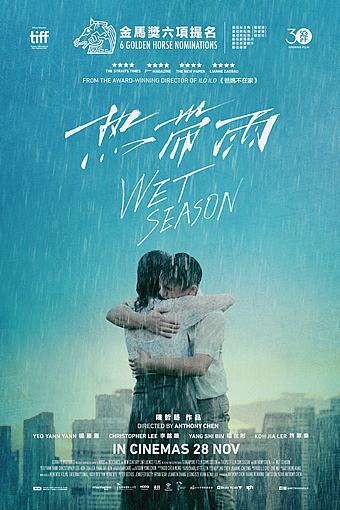
More so than ‘Ilo Ilo’ and ‘Wet Season’, Chen shines a light here on the working-class, lower-income members of our Singaporean resident population. Yeo is Malaysian-born, Singaporean PR kopitiam beer auntie Lee Bee Hwa, who, at the start of the film, is staying with her brother’s family in the latter’s son’s bedroom, much to the consternation of her sister-in-law. Overhearing her intention to find her own place, Andi Lim’s widowed Hokkien mee-seller Lim Boon Kiat asks Bee Hwa if she would like to move into his 3-room HDB flat, an offer she initially refuses but eventually accepts after a couple of quietly comforting dates and a wedding at the very kopitiam they work at.
The same flat gets unexpectedly crowded when Boon Kiat’s son Junyang (Jia Ler) gets his high-school JC girlfriend Lydia (Regene Lim) pregnant during a staycation at Marina Bay Sands to celebrate their anniversary together. It is no coincidence that Lydia hails from an upper middle-class family – and as the only daughter of her staunchly Catholic mother (Petrina Kow) whose husband had walked out of the family before Lydia was born, it is not surprising that Lydia’s mother takes a dim view of a school dropout whom Lydia had met at a BTS concert.
At two-and-a-half hours, ‘We Are All Strangers’ easily qualifies as Chen’s longest film yet, but despite a very generous runtime, the movie doesn’t always do all its characters justice (and we recognise that may not have been Chen’s intention). Chen gives focus to Boon Kiat’s desire for companionship, as well as the tender, sweet and eventually heartbreaking relationship he forges with Bee Hwa – perhaps most memorable is a long bus ride that Boon Kiat and Bee Hwa hop on for their first date (which Chen has said is one of his favourite parts of the film), and it is indeed a quietly poignant scene that allows both these individuals (and us) to simply put on a pause on their hectic lives and appreciate the simple beauty around Singapore. We dare say that the unlikely bond between these two adults, hard done by life and its circumstances, becomes the emotional anchor on which the movie lives and breathes.
The other anchor on which the movie rests on is Junyang’s adulting, driven by his newfound responsibility as a father. Chen casts Junyang’s struggles as the microcosm of less-educated young adults today, going from one odd job to another, including platform delivery work and live-streaming. Somewhat unfortunate is how Junyang’s relationship with Lydia falls by the wayside over the course of the film – besides financial troubles, it is taken for granted how parenthood imposes a strain on their marriage (and as many married couples will tell you, it most certainly does).
Lydia herself also gets short shrift. It is certainly not easy for a promising teenager like her to drop her studies and leave her upper middle class family to move in with Junyang, but there is hardly any attention spent on her own adulting journey. Ditto the relationship between Lydia and her mother, and it is indeed a pity that Lydia’s mother becomes such a side act that she hardly features beyond the first act of the movie, not least because it is also not easy for her to let go of her only daughter. Chen’s sympathies with the less well-to-do in Singapore society is well evident here, but that is also scant excuse to neglect the perspectives of Lydia and her mother especially when the circumstances of life have not been kind to either of them too.
Because Chen takes a slice-of-life approach to the film, the proceedings can unfold somewhat arbitrarily and to some, appear even rudderless. It doesn’t help that Chen does not quite signpost the passing of time throughout the film, so much so that the fact events over the course of the movie take place at different paces comes off confusing. Chen is also not immune to cliches, and one late in the film is still a very Jack Neo feature, even if done a lot more elegantly and with nuance here. Though we understand Chen’s intent, we also foresee that those looking for neat bookends to the movie will need to be prepared to be frustrated.
Some have described ‘We Are All Strangers’ as Chen’s love letter to Singapore, with all its quirks, inadequacies and even inequalities; and it is honest, sobering and even to some extent, uplifting. But its shortcomings are also apparent, both in the uneven treatment of its characters and its choppy storytelling, both of which are even more disappointing given how Chen had executed both with a lot more polish in ‘Ilo Ilo’ and ‘Wet Season’. As a concluding chapter, it is a good but not quite resounding finish; what shines through though is its humanity – because at the end of the day, many of us are just trying to make the best of the lot we are given in life.
Movie Rating:


(Anthony Chen's 'We Are All Strangers' is an honest and humane portrait of ordinary Singaporeans making the best of life's circumstances, but its uneven characterisation and choppy storytelling make it a good - rather than resounding - finale to his 'Growing Up' trilogy)
Review by Gabriel Chong
You might also like: