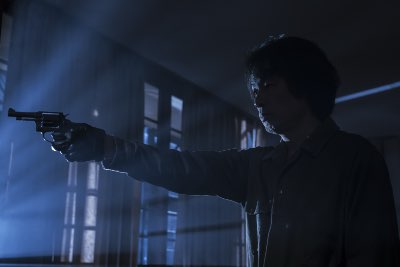


NEVER AFTER DARK (ネバーアフターダーク) (2026)
Genre: Horror/Thriller
Director: Dave Boyle
Cast: Moeka Hoshi, Kurumi Inagaki, Kento Kaku, Mutsuo Yoshioka, Bokuzo Masana, Tae Kimura
Runtime: 1 hr 45 mins
Rating: NC16 (Violence and Horror)
Released By: Shaw Organisation
Official Website:
Opening Day: 22 October 2026
Synopsis: A wandering medium, Airi spends her life guiding restless spirits out of the world of the living. Summoned to an isolated country house, she comes face to face with a grotesque apparition with powers that defy Airi's experience. As she digs deeper into the house's past, a secret comes to light — and Airi finds herself hunted by a far more unpredictable force. For the first time, her greatest adversary is not the supernatural, but the living...
Movie Review:
Japanese horror has a way of getting under your skin without necessarily having to throw a ghost in your face. Films like Ringu (1998) and Ju-On: The Grudge (2002) demonstrate how unsettling imagery, creeping dread and the suggestion of something lurking just beyond our field of vision can be far more effective than a barrage of jump scares.
So how does an American filmmaker like Dave Boyle capture that distinctly Japanese flavour? With Never After Dark, he shows that understanding the genre’s conventions — and knowing when to subvert them — can be just as important as knowing how to scare an audience.
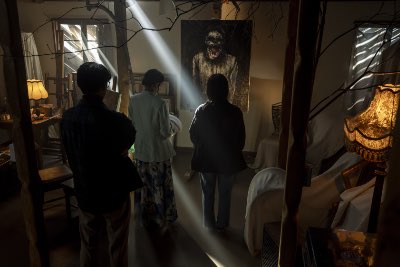
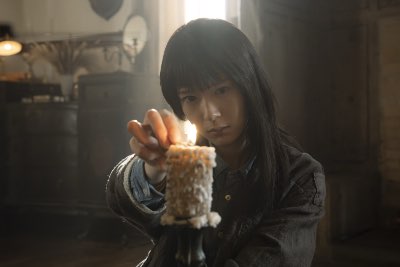
Boyle, who has directed several films set in Japan and featuring Japanese or Japanese-American casts, tells the story of Airi (Moeka Hoshi), a travelling medium who helps restless spirits move on to the afterlife. Accompanied by her assistant, she arrives at a secluded country house to exorcise a troublesome spirit for its new owner, Teiko (Tae Kimura), and her son, Gunji (Kento Kaku). What begins as a seemingly routine assignment soon takes a sinister turn as Airi discovers that the haunting is far more complicated than she anticipated.
The film initially unfolds like many other haunted-house horror movies. A woman with supernatural abilities arrives at a sprawling mansion, ready to rid it of an unwelcome presence. You might think you already know where this is heading, but Boyle has other plans.
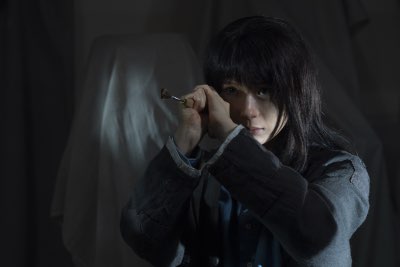
The first surprise comes when a reflection shot reveals that Airi’s companion, whom you might have assumed was her younger sister, is not human at all. In fact, Miku (Kurumi Inagaki) is her elder sister, who died as a child and has remained that age ever since. It is a clever little reveal that immediately makes you question what else you might have taken for granted.
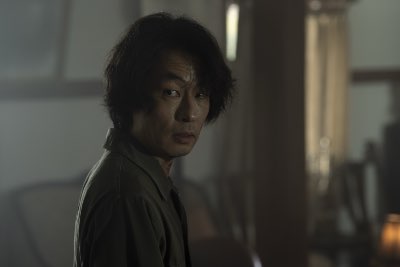
Then there are Airi’s clients. Teiko seems unusually inquisitive, while her son is decidedly more guarded. Are they simply a mother and son dealing with an unwanted haunting, or might they have something to hide? Without giving too much away, the film gradually builds a mystery that extends beyond the usual question of how to send a spirit back to the other side.
Hoshi is an excellent choice for the lead. Best known internationally for her role in TV series Shōgun, she brings an intriguing combination of otherworldliness and weariness to Airi. Beneath her occasionally chirpy demeanour is someone who seems more comfortable around the dead than the living.
The makeup effects are another highlight. The spirit’s grotesque appearance is convincingly realised, and while the film does not linger over its bloody imagery in all its gruesome glory, the quick glimpses are enough to leave an unpleasant picture in your mind.
What makes Never After Dark particularly satisfying is how its ending encourages you to reconsider the visuals and seemingly incidental details scattered throughout its slow-burning narrative. The pieces gradually come together, rewarding viewers who have been paying attention. Its clever twist distinguishes it from many familiar Japanese ghost stories, including those that rely on the tragic circumstances behind a spirit’s existence to deliver their emotional punch.
Never After Dark may take its time getting under your skin, but patience pays off. Boyle understands that the most effective horror does not always reveal its hand immediately. Sometimes, what truly frightens us is realising that we have been looking at something all along without understanding what we were seeing.
Movie Rating:


(Patience is key in Never After Dark, a slow-burn horror film that saves its most satisfying trick for the very end)
Review by John Li
You might also like:



(reference).jpg)
Movie Stills