


SYNOPSIS: Directed by Academy Award-nominee Paul Greengrass and inspired by real events, “The Lost Bus” is a white-knuckle ride through one of America’s deadliest wildfires, as a wayward school bus driver (Academy Award-winner Matthew McConaughey) and a dedicated school teacher (Emmy, SAG and Golden Globe Award-winner America Ferrera) battle to save 22 children from the terrifying inferno.
MOVIE REVIEW:
Paul Greengrass’ penchant for bringing real-life disaster dramas (United 93, Captain Phillips) to the screen translates once again in The Lost Bus- a survival drama inspired by the devastating 2018 Camp Fire in Northern California.
After a brief hiatus, Oscar winner Matthew McConaughey returns as Kevin McKay, a down-and-out school bus driver having perhaps the worst day of his life. His teenage son is sick and left at home with his disabled mother, while a raging wildfire rapidly closes in. Amid the chaos, Kevin is dispatched to evacuate more than twenty children and their teacher, Mary Ludwig (America Ferrera), from a local school.
The Lost Bus is one of those based-on-true-events dramas that impresses more through its visual spectacle than its storytelling. That’s not to say that writers Greengrass and Brad Ingelsby fail to inject drama into the two-hour runtime — far from it. Several side characters make a strong impression despite limited screen time, notably Cal Fire Battalion Chief Ray Martinez (Yul Vazquez), the central coordinating authority, and school bus dispatcher Ruby Bishop (Ashlie Atkinson), who does everything she can to send a rescue bus despite the encroaching inferno.
At its heart, however, the story belongs to Kevin and Mary as they struggle to navigate a bus full of terrified children through roads surrounded by fire. It’s a feat that borders on implausible given the fierce winds and spreading flames, yet McConaughey and Ferrera ground their characters with grit and authenticity. McConaughey’s Kevin is a flawed man seeking redemption — a weary soul burdened by mistakes but driven by compassion. Ferrera, though given less to work with, matches him with a spirited performance, especially in a tense, well-staged sequence where she risks her life to fetch water for the children.
On the technical front, The Lost Bus is top-tier. Greengrass and his team deliver a stunning combination of CGI, stagecraft and practical effects that recreate the terror of the wildfire with visceral realism. Many scenes unfold with the immediacy of a docudrama — another Greengrass hallmark — and the bus sequences are so claustrophobic you can almost feel the heat, tension and desperation of those trapped inside.
Ultimately, The Lost Bus is a disaster film that demands to be seen on the big screen. While its story occasionally veers toward Hollywood dramatization, it’s anchored by strong performances and superb craftsmanship. It’s a gripping, human-centered tale about everyday heroes and a stirring reminder of resilience and selflessness in the face of unimaginable catastrophe.
MOVIE RATING:


Review by Linus Tee
Genre: Sci-fi/Action
Director: Joachim Rønning
Cast: Jared Leto, Greta Lee, Evan Peters, Hasan Minhaj, Jodie Turner-Smith, Arturo Castro, Cameron Monaghan
Runtime: 1 hr 59 mins
Rating: PG (Some Violence)
Released By: Walt Disney Pictures
Official Website:
Opening Day: 9 October 2025
Synopsis: Tron: Ares follows a highly sophisticated program, Ares, who is sent from the digital world into the real world on a dangerous mission, marking humankind’s first encounter with A.I. beings.
Movie Review:
Disney’s Tron franchise has always been about one thing above all else—visual spectacle. From the neon-drenched original in 1982 to Tron: Legacy’s glossy revival in 2010, each film has pushed the boundaries of what digital worlds could look like on screen. Tron: Ares, the latest chapter, continues that tradition with a vengeance. It’s an audiovisual feast that feels like being plugged directly into the motherboard of a dream. The light, texture, and kinetic energy on display are staggering—every frame hums with sleek, futuristic precision. If cinema were judged purely on how good pixels can look exploding in slow motion, Tron: Ares would be an instant masterpiece.
Fronting the film is Jared Leto as Ares, a self-aware program sent on a mission that blurs the boundaries between digital and human existence. Leto’s casting brings undeniable star power—he looks great under the glow of a circuit suit—but thankfully, Tron: Ares doesn’t demand much acting heavy-lifting from him. His calm, enigmatic presence fits the role, and director Joachim Rønning wisely leans on Leto’s charisma rather than overcomplicating the character. Ares doesn’t need to be Hamlet; he just needs to look cool while riding a lightcycle through a storm of data. Mission accomplished.
The real surprise, though, is Greta Lee. Best known for her sharp, subtle work in arthouse gems like Past Lives, Lee makes an unexpectedly smooth transition into blockbuster territory. She brings an emotional grounding that the Tron universe has often lacked, playing a scientist whose moral conflicts bridge the gap between our world and the digital one. Lee has a knack for balancing sincerity with an edge of irony—she seems aware of how absurdly grand the Tron mythology can be, yet she plays it straight enough to make it matter. Her performance gives the film’s neon-drenched world something it’s rarely had before: warmth.
Plot-wise, Tron: Ares doesn’t reinvent the wheel—or the lightcycle. There are still identity disks, philosophical musings about AI consciousness, and plenty of scenes where people shout techno-babble in front of holographic interfaces. But the storytelling is tighter this time, and the action sequences—especially a mid-film chase through a collapsing data corridor—are thrilling enough to make your pulse sync with the Daft Punk-inspired score.
At two hours, it moves briskly, though you might occasionally wish for more substance beneath the spectacle. Still, that spectacle delivers. Watching Tron: Ares feels like being handed a pair of 3D glasses for the future. And when the credits roll, you might find yourself having the urge to visit Disneyland’s Tron Lightcycle Run ride. The film practically doubles as a recruitment video for Disney’s Imagineering team—only, it’s one you’ll gladly sign up for.
In the end, Tron: Ares isn’t the deepest movie you’ll see this year, but it’s a dazzling return to a world where imagination and code collide. With jaw-dropping visuals, a grounded performance from Greta Lee, and just enough Jared Leto to keep the circuits humming, it’s proof that sometimes, style really is substance—and that The Grid still has plenty of power left to spare.
Movie Rating:
(Dazzling with electrifying visuals, this movie is an eye-popping sci-fi ride that’ll make you want to race straight to Disneyland’s Tron Lightcycle Run)
Review by John Li
Genre: Comedy/Action
Director: Simon West
Cast: Rebel Wilson, Anna Camp, Anna Chlumsky, Da'Vine Joy Randolph, Gigi Zumbado, Stephen Dorff, Justin Hartley
Runtime: 1 hr 45 mins
Rating: PG13 (Some Violence and Sexual References)
Released By: Shaw Organisation
Official Website:
Opening Day: 16 October 2025
Synopsis: Never mix business with pleasure. For badass secret agent Sam (Rebel Wilson), that hasn't been difficult. But now she's tasked with one of the hardest missions yet–being maid of honor for her childhood best friend. Deep out of her comfort zone, Sam barely maintains her cover as a dependable friend even on the day of the extravagant wedding. And what's worse, the three bridesmaids are judging her every move. But when a team of mercenaries take the uber-wealthy wedding guests hostage, it's up to Sam to do what none of the other bridesmaids can–wage war on anyone who would ruin the most important day of her best friend's life.
Movie Review:
When a character in Bride Hard remarks near the end, “It’s like a Hallmark Christmas movie,” she’s not far from the truth. Indeed, Bride Hard feels exactly like that - a straight-to-streaming Hallmark movie wearing an action-comedy disguise.
A laugh-free Rebel Wilson stars as Sam Doolan, a secret agent who takes time off from saving the world to serve as maid of honour at the wedding of her childhood best friend, Betsy O’Connell (Anna Camp). Unfortunately, Sam’s inability to switch off her spy instincts and her constant absence from Betsy’s Paris bachelorette party sparks the ire of the bride and her overzealous sister-in-law, Virginia (Anna Chlumsky).
When the lavish island wedding is suddenly attacked by terrorists led by Stephen Dorff, Sam must spring into action to save her best friend, the guests and possibly the entire ceremony from disaster.
From the title alone, you can tell it’s aiming to be a mash-up of Bridesmaids and Die Hard. In theory, that sounds like a fun recipe — raunchy comedy meets explosive action. And to its credit, the film includes both ingredients. Most of the R-rated jokes come courtesy of Oscar winner Da’Vine Joy Randolph’s Lydia, one of Betsy’s college friends, while Wilson chips in a few cheeky one-liners that feel like her own improvisations. Unfortunately, almost none of it lands. The humour is painfully flat and the slapstick gags feel forced and juvenile.
It’s clear the project was designed as a vehicle for Wilson, possibly to showcase her post-weight-loss transformation and move beyond her “Fat Amy” persona from Pitch Perfect. But what made her so memorable in that franchise — her fearless comedic timing and effortless charm is missing here. As Sam Doolan, she looks uncomfortable, out of sync, and utterly disengaged. Where Melissa McCarthy turned a similar spy spoof into comic gold with Spy, Wilson struggles under the weight of a lifeless script and limp direction.
Veteran British director Simon West (Con Air, Lara Croft: Tomb Raider) helms Bride Hard, though his recent track record hasn’t been stellar. While the film offers its share of explosions and gunfire, most of it looks cheap and unconvincing, hampered by poor CGI and uninspired staging. And yes using a chocolate fountain as cover during a firefight is exactly as ridiculous as it sounds.
In hindsight, Wilson and Camp might be better off reuniting with Anna Kendrick and Hailee Steinfeld for another Pitch Perfect entry rather than wading through poorly conceived action comedies like this. A secret agent infiltrating a wedding under siege by mercenaries could have been fun — with sharp writing, better direction, and the right tone. Instead, Bride Hard is a misfire that’s neither funny nor thrilling.
Movie Rating:
(Neither humorous nor action-packed, Bride Hard is one wedding invitation you’ll want to decline)
Review by Linus Tee
SYNOPSIS: The true story of the meteoric rise & catastrophic demise of the world's first smartphone, BLACKBERRY is a whirlwind ride through a ruthlessly competitive Silicon Valley at breakneck speeds.
MOVIE REVIEW:
Before Apple’s iPhone reigned supreme in the smartphone world, there were the likes of BlackBerry, Palm, Motorola, and Nokia. BlackBerry tells the story of how one of these early giants — the company that made QWERTY keyboards iconic rose to global dominance and eventually met its downfall.
Set in Waterloo, Ontario in 1996, the film follows Mike Lazaridis (Jay Baruchel) and Doug Fregin (Matt Johnson), co-founders of Research in Motion (RIM). Initially a small modem manufacturer, their company caught the attention of the fiercely ambitious Jim Balsillie (Glenn Howerton), who became co-CEO. Under his aggressive leadership, their prototype “PocketLink” evolved into the BlackBerry, a revolutionary device that became a global phenomenon even drawing the envy and eventual hostility of competitors like Palm.
Directed and co-written by Matt Johnson, BlackBerry plays like a sharp, fast-paced docudrama. It’s energetic, often chaotic and shot with a handheld, almost documentary feel that mirrors the manic pace of the tech world it depicts. While the tone can be light and humorous, the film’s portrayal of corporate ambition, hubris and technological obsession runs deep.
The story revolves around the contrasting personalities at the heart of RIM. Lazaridis, the brilliant but idealistic engineer, is obsessed with creating a flawless product often at the expense of business sense. Balsillie, in contrast, is a ruthless, foul-mouthed executive whose hunger for success knows no limits. Meanwhile, Fregin, the eccentric and easily distracted co-founder, represents the fading spirit of the startup’s early, geeky camaraderie and inevitably becomes the first casualty of corporate evolution.
Though it’s framed as a tech biopic, BlackBerry is really about people — the visionaries and egos that drive innovation and destruction alike. The film suggests that technology doesn’t fail; people do. A company’s downfall often stems not from its engineering flaws but from mismanagement, ego clashes and an inability to adapt.
Blending tragedy and comedy, BlackBerry delivers both an entertaining and insightful look at the volatile nature of the tech industry. Baruchel and Howerton are outstanding, anchoring the film with their sharply contrasting performances. Smartly written, fast-moving and surprisingly funny, BlackBerry is one of the best cautionary tales about the rise and fall of modern innovation.
And if there’s one takeaway after watching this, you might start wondering: who’s next? Microsoft? Nokia? We can only hope more stories like this get their time on screen.
MOVIE RATING:
Review by Linus Tee
SYNOPSIS: Based on the bestselling novel The Woman in Cabin 10 by Ruth Ware. While on board a luxury yacht for a travel assignment, a journalist (Keira Knightley) witnesses a passenger thrown overboard late at night, only to be told that it didn’t happen, as all passengers and crew are accounted for. Despite no one believing her, she continues to look for answers, putting her own life in danger.
MOVIE REVIEW:
The Woman in Cabin 10 is based on Ruth Ware’s 2016 best-selling novel. Ware’s writing style has often been compared to that of the late mystery queen Agatha Christie. For full disclosure, we haven’t read any of Ware’s novels, so this review is based purely on the movie adaptation itself.
Keira Knightley stars as Lo Blacklock, an award-winning journalist invited to cover the launch of Norwegian shipping heiress Anne Lyngstad’s new cancer foundation aboard a super-luxurious private yacht- think Jeff Bezos-level opulence. Lyngstad, who is battling late-stage cancer, plans to donate her entire fortune to charity alongside her husband, Richard Bullmer (Guy Pearce). Among the select guests is Lo’s ex-boyfriend, Ben Morgan (David Ajala), who has been hired as the event photographer.
One night, Lo hears strange noises coming from the adjacent cabin and witnesses what appears to be a body being thrown overboard from Cabin 10. She raises the alarm, a roll call is conducted but no one is missing. Everyone else is enjoying themselves while Lo grows increasingly anxious. Conveniently, she’s also suffering from PTSD, a detail the film glosses over in passing.
Did Lo imagine what she saw? Or is someone on board trying to silence her? The mystery thickens or at least, it tries to.
The Woman in Cabin 10 feels like a modern, watered-down version of Death on the Nile (2022)- only less old-fashioned, less intriguing, and far less entertaining. None of the supporting characters are compelling enough to serve as true “suspects,” despite a capable cast that includes Hannah Waddingham, David Morrissey, Kaya Scodelario and Christopher Rygh. There’s really only one obvious suspect in this whole affair, and most viewers will likely figure it out long before Lo finds herself trapped in a pool, struggling for her life.
Director and co-writer Simon Stone maintains a veneer of tension through incessant loud sound effects and slick visuals, but it all leads to very little. Knightley, to her credit, turns in a solid performance as a determined journalist caught in over her head. Unfortunately, even her efforts can’t rescue the film from its glossy emptiness.
By the end of its 95-minute runtime, The Woman in Cabin 10 proves to be yet another forgettable Netflix thriller- polished on the surface but hollow underneath. Honestly, we’d rather buy another ticket to Kenneth Branagh’s Hercule Poirot escapades than set sail on this one again.
MOVIE RATING:
Review by Linus Tee

|
DIANE KEATON (1946 - 2025)Posted on 12 Oct 2025 |
Genre: Drama
Director: Ong Kuo Sin
Cast: Richie Koh, Hong Hui Fang, Johnny Lu, Charlie Goh, Cheryl Chou
Runtime: 1 hr 44 mins
Rating: M18 (Mature Content)
Released By: GV & Clover Films
Official Website:
Opening Day: 9 October 2025
Synopsis: A GOOD CHILD weaves a compelling narrative around Jia Hao, a drag queen who, after years of estrangement, returns home to care for his mother Ju Hua, who has been diagnosed with dementia. What begins as a dutiful obligation swiftly transforms into an unexpected opportunity for healing. With quick thinking, Jia Hao takes on the role of his mother’s long-lost daughter a tender yet unconventional deception that paves the way for a heartfelt journey of reconnection, acceptance, and self-discovery.
A GOOD CHILD is adapted from the life story of Christopher Lim 林同利, more commonly known for his drag alias – Sammi Zhen 阿真, a full-time drag queen in Singapore
Movie Review:
Dementia is scary, not just for the individual losing awareness of his or her surroundings and eventually memories of the past, but also for the individual’s immediate family thrust with the burden of caregiving. What is equally, if not more, scary is coming to terms with the past that has been clouded by misgivings, misunderstandings and even betrayals, made worse because they have been left to fester over time.
‘A Good Child’, from director-writer Ong Kuo Sin, deftly weaves both subjects into his tender, poignant story of a drag queen, Jiahao (Ritchie Koh), who returns home to care for his bereaved mother (Hong Huifang) following the death of his father. Drag queens have been the centre of Ong’s previous two films – Number 1 and Number 2, both anchored prominently by Mark Lee – but his latest, based on the true story of real-life drag performer Christopher Lim (alias Sammi Zhen) is by far the best of them for so many reasons.
Much has been said about Ritchie Koh’s revelatory performance here, which earned the MediaCorp artiste a Golden Horse Award nomination for Best Actor; and we can hand on heart say that it is no fluke. Koh is truly extraordinary in the role, starting off the movie playing Jiahao with campy insolence, before slowly revealing layer by layer the anger, pain and indignance he has been carrying within for many years, and finally laying bare his own search for identity and belonging all this while.
Credit too must go to Ong, who details with care and nuance, just what drove Jiahao away from his family, what led to his spitefulness, and how he eventually lives up to be the titular good child. Koh calibrates Jiahao’s transformation over the course of the movie beautifully, saving perhaps the gut punch for the last act, when his mother reveals a secret that challenges his very understanding of family. It is heart-wrenching to say the least, and we watched with absolute awe how Koh disappears into the role with such ease and confidence.
Koh is also supported by a brilliant ensemble. Hong has probably played a variation of her role here in other MediaCorp dramas over the decades, but her unassuming performance is all the more emotionally devastating – besides Jiahao, her character also eventually comes to terms with what she has been harbouring all along, and you can feel her raw anguish onscreen as she comes to terms with how her actions could have influenced Jiahao’s upbringing as well as her husband’s stern rejection of Jiahao’s effeminate behaviour when he was young.
As Jiahao’s boyfriend David, Taiwanese-American actor Stanley Lu is also splendid. Content to let Koh have the spotlight, Lu nonetheless shines in a restrained supporting role as Jiahao’s pillar of strength and support through and through. Without resorting to any histrionics, a scene which sees Jiahao’s mother give both of them her support for their marriage is truly affecting, and testament to how subtle yet powerful Lu’s portrayal has been.
In lesser parts, both Charlie Goh and Cheryl Chou as Jiahao’s elder brother and sister-in-law also lend grounded performances that further reinforces the movie’s verisimilitude. For the former, the choice between career and taking care of his mother is what forces him to confront what filial piety is; ditto for the latter, who confesses right from the start that she does not have what it takes to look after her mother-in-law in her current state.
Never mind the occasionally uncomfortable moments when Koh goes full drag on stage, ‘A Good Child’ is at its heart a sobering portrait of so many things at once. It is about the very real burden of caregiving; it is also about letting go, finding the courage to embrace family once more and the willingness to forgive, because reconciliation is at the end the better path to choose; and last but not least, it is about who we are, whether in terms of gender, sexual orientation, and just as fundamentally, a brother and a son (or daughter).
Than say anything more, we urge you to go see, experience and reflect on ‘A Good Child’ for yourself. It is, we dare say, one of the very best local movies we have seen in a long while, certainly one of the most tender, touching and affecting ones ever. Don’t be offput by its subject matter (of drag queens); this is as beautiful and moving a mother-child tale as it gets, anchored by one of the most talented young actors by far in Singapore, and it is our sincere hope that every Singaporean supports this local production we should all be proud of.
Movie Rating:
(Heartfelt, poignant and deeply moving, this story of filial piety, identity and reconciliation is one of the most beautiful local movies ever made)
Review by Gabriel Chong
Genre: War/Drama
Director: Guan Hu, Fei Zhenxiang
Cast: Zhu Yilong, Wu Lei, Ni Ni, William Franklyn-Miller, Yang Haoyu, Chen Minghao, Ni Dahong
Runtime: 2 hr 13 mins
Rating: NC16 (Violence)
Released By: Encore Films and Golden Village
Official Website:
Opening Day: 23 October 2025
Synopsis: Based on a true event, Dongji Rescue unveils a long-buried maritime massacre and honors an extraordinary act of civilian heroism that shook the world 83 years ago. In 1942, Japanese ship Lisbon Maru with British POWs was torpedoed. On Dongji Island, a group of Chinese fishermen risk everything to sail into the chaos. Driven by raw courage and deep humanity, they embark on a daring mission to rescue strangers from a foreign land—defying death, the enemy, and history itself.
Movie Review:
For most of us in this part of the world, the Lisbon Maru incident—on which Dongji Rescue is based—will sound only faintly familiar, if at all. It was a tragic episode during World War II, when a Japanese ship carrying British prisoners of war was torpedoed and sunk off the coast of Zhoushan. In this new Chinese blockbuster, that little-known story is transformed into a sweeping, high-octane spectacle of courage and compassion at sea.
The movie helmed by Guan Hu and Fei Zhenxiang overwhelms the senses. The action is fast and furious, with explosions, water cannons, and wave-tossed chaos crashing across the screen in relentless succession. It’s the kind of sensory overload that doesn’t give you time to breathe. It may tire some viewers out, but that is perhaps the point. The filmmakers probably want audiences to feel the confusion and peril faced by the fishermen who risked everything to save strangers caught in wartime crossfire. The film doesn’t just depict the rescue—it throws you right into it.
No expense appears to have been spared. The production reportedly built a full-scale replica of the Lisbon Maru, and it shows. The ship’s cavernous hold, rust-streaked decks, and collapsing hull lend the movie a tangible weight that CGI alone could never replicate. Complementing it are fleets of wooden fishing boats painstakingly modelled after those from more than eighty years ago—each plank, oar, and net recreated with obsessive detail. When the story moves from claustrophobic ship interiors to open seas, the visual transition is breathtaking. There are plenty of CGI sequences of storm-lashed waters and explosions.
While much of Dongji Rescue is engineered for spectacle, it’s clear the movie also knows its audience. Female fans in particular may appreciate the near-constant display of leading men Zhu Yilong and Wu Lei in heroic, bare-chested form. Their toned physiques and balletic swimming scenes are unmistakably part of the draw—unabashed cinematic eye candy, perhaps gratuitous, yet undeniably effective.
The film truly hits its stride in the finale rescue sequence—a prolonged, pulse-pounding set piece that keeps viewers on the edge of their seats. Waves surge, the Lisbon Maru slowly crumbles, and men cling to life amid the roaring chaos. It’s a meticulously choreographed blend of war film and disaster movie. The tension never lets up, and by the time the final survivors are pulled from the sea, you may find yourself gripping the armrest just a little tighter.
Beneath the surface gloss, however, lies a clear ideological current. As a mainland Chinese production, Dongji Rescue inevitably frames the story through a lens of national pride, celebrating the bravery of ordinary fishermen who defied danger to rescue prisoners from foreign shores. There are moments when this patriotic fervour tilts toward propaganda, but for viewers who are familiar with this genre, one can easily feel the sincerity of the story’s admiration the fishermen’s heroism. However dramatised, their actions are emotionally stirring. It also helps that interviews with relatives of the prisoners of war and surviving fishermen show up during the end credits.
Ultimately, Dongji Rescue succeeds as a crowd-pleasing war drama and an immersive technical showcase, complete with a bombastic soundtrack. Its sheer scale and craftsmanship make it one of the most visually impressive maritime films in recent memory. The sensory barrage may be exhausting, but it’s hard not to be swept along by its conviction.
Movie Rating:
(Big, loud, and visually commanding, Dongji Rescue transforms real-life tragedy into a spectacle of survival and sacrifice—powered by the star wattage and physiques of lead actors Zhu Yilong and Wu Lei)
Review by John Li
|
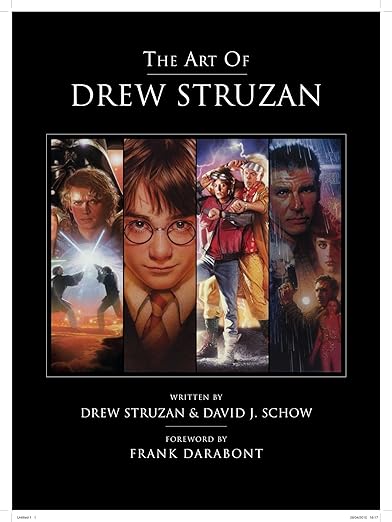
DREW STRUZAN (1947 - 2025)Posted on 15 Oct 2025 |
Genre: Action/Sci-Fi
Director: Dan Trachtenberg
Cast: Elle Fanning, Dimitrius Schuster-Koloamatangi
Runtime: 1 hr 50 mins
Rating: NC16 (Violence)
Released By: Walt Disney
Official Website:
Opening Day: 6 November 2025
Synopsis: 20th Century Studios’ “Predator: Badlands,” directed by Dan Trachtenberg (“Prey”), opens exclusively in theaters November 7, 2025. The newest entry in the “Predator” franchise is set in the future on a remote planet, where a young Predator (Dimitrius Schuster-Koloamatangi), outcast from his clan, finds an unlikely ally in Thia (Elle Fanning) and embarks on a treacherous journey in search of the ultimate adversary.
Movie Review:
After decades of blood-soaked hunts and grim-faced soldiers facing certain doom, Predators: Badlands finally dares to do something different — and for a franchise that has often taken itself far too seriously, that’s saying something.
Gone are the stoic jungle ambushes and the existential brooding about man versus monster. In their place comes something almost bizarre, yet surprisingly fun: a buddy adventure between a down-on-his-luck Predator and a legless synthetic companion wandering across a dangerous planet.
Directed with gleeful irreverence by Dan Trachtenberg — who helmed 2022’s Prey and 2025’s Predator: Killer of Killers (both well received on Disney+) — Badlands feels almost like a parody at first glance. The Predator — traditionally a symbol of lethal precision and intergalactic menace — is reimagined here as a hapless warrior who can’t quite live up to his species’ fearsome reputation.
New Zealand actor Dimitrius Schuster-Koloamatangi, wearing a full Yautja body suit with his face replaced via performance-capture CGI, plays Dek, a Predator who fumbles, sulks, and even emotes — yes, technology has finally caught up to the point where you can see these expressions and not think they’re clumsily cobbled together by movie magic. It’s equal parts ridiculous and brilliant, giving the iconic creature a layer of unexpected comic charm.
His unlikely companion, a damaged synthetic intelligence (the ever-luminous Elle Fanning) housed in a mobile half-body, provides the perfect foil. Where the Predator grunts and gestures, the synthetic babbles incessantly, dispensing advice, sarcasm, and occasional moral lessons about survival and failure. Together, they stumble into a quest met with one peril after another. It’s a mix of absurdity and high-octane action that somehow works — or at least keeps you grinning through the mayhem.
For longtime fans of the series, this tonal shift may feel like heresy. Gone is the self-serious dread of Predator (1987). Badlands instead embraces a cartoonish sensibility, more space-western than horror thriller. Yet beneath the goofiness, it retains a genuine affection for the franchise’s lore. The designs of the Predator weapons, ships, and armour are lovingly detailed; the cinematography, awash in ochres and crimson, makes the titular badlands feel vast and strangely beautiful.
The action, too, remains top-tier. Several exhilarating set pieces justify seeing the film on the biggest screen possible. In IMAX, the film’s scale and spectacle are fully realised, with creature design and practical effects blending seamlessly with digital wizardry. It’s loud, chaotic, and often hilarious — but always entertaining.
Perhaps most refreshing is that Predators: Badlands doesn’t pretend to be profound. It knows it’s a popcorn flick and revels in that fact. The film zips along at a brisk pace, never bogged down by exposition or mythology dumps, instead letting its odd-couple dynamic carry the weight. By the time the credits roll, you may find yourself oddly fond of its bumbling antiheroes.
Is it silly? Absolutely. But it’s also the most fun this franchise has had in years — a reminder that even the fiercest hunter in the galaxy can occasionally afford to laugh at himself. And judging by the mid-credits tease, Badlands might just be the strange new direction this long-running series needed.
Movie Rating:
(Predators: Badlands may not redefine the franchise, but its offbeat humour and dazzling action make it the most fun the series has had in years)
Review by John Li
| « Prev | 543 | 544 | 545 | 546 | 547 | 548 | 549 | 550 | 551 | 552 | 553 | Next » |
Most Viewed
No content.