


Genre: Drama/Romance
Director: Pedro Almodóvar
Cast: Adriana Ugarte, Emma Suárez, Daniel Grao, Darío Grandinetti, Inma Cuesta, Rossy de Palma, Michelle Jenner
Runtime: 1 hr 39 mins
Rating: M18 (Sexual Scenes)
Released By: Shaw
Official Website:
Opening Day: 29 December 2016
Synopsis: Julieta lives in Madrid with her daughter Antía. They both suffer in silence over the loss of Xoan, Antía’s father and Julieta’s husband. But at times grief doesn’t bring people closer, it drives them apart. When Antía turns eighteen she abandons her mother, without a word of explanation. Julieta looks for her in every possible way, but all she discovers is how little she knows of her daughter. JULIETA talks about the mother’s struggle to survive uncertainty. It also talks about fate, about guilt complexes and about that unfathomable mystery that leads us abandon the people we love, erasing them from our lives as if they had never meant anything, as if they had never existed.
Movie Review:
After the trippy but ultimately exhausting high-altitude frivolity of 2013’s ‘I’m So Excited’, Spanish auteur Pedro Almodovar returns to more serious territory with ‘Julieta’, adapted from three short stories by Canadian author Alice Munro from her 2004 volume ‘Runaway’. Set across two time periods spanning a quarter-century, it is a tale of two Julietas: the present-day Julieta (Emma Suarez) a middle-aged woman who is about to leave Madrid for Portugal with her partner Lorenzo (Dario Grandinetti), for whom a chance encounter with a childhood friend of her estranged daughter Antia unleashes a torrent of memories; and the younger Julieta from the 80s (Adriana Ugarte), a young and gifted teacher of classical literature, for whom a chance encounter with a handsome young fisherman Xoan (Daniel Grao) on board a nocturnal train journey will lead to a romance with life-changing consequences (and yes, if you’re guessing, Xoan is indeed the father of her daughter Antia).
Already from that brief description, those familiar with Almodovar’s works will recognise some familiar themes in his female-centric stories – random fate, buried secrets, and unfathomable guilt. Fate not only determines that the present-day Julieta face up to the ghosts of her past and the younger Julieta give up her passion for teaching to start a new life with Xoan, but also would have that Xoan and Julieta land in a bitter argument just before a tragic accident at sea claims his life and fractures the relationship between Julieta and Antia irrevocably. More than the loss of their loved one, it is silence that proves to be the true villain, leading both mother and daughter to internalise their grief that leads to the chasm between them. Such buried secrets, in Julieta’s case, precipitates that yawning sense of guilt that no individual can ultimately run away from, which Julieta tries to relieve by penning her thoughts – as if explaining herself to Antia – of her earlier adult life.
In the hands of a lesser director, such a character study on the subject of loss could have easily turned into a melodrama; and yet, Almodovar demonstrates elegant restraint in depicting grief, guilt and burden. In fact, Almodovar’s storytelling resembles a Hitchcockian thriller in the way that it pieces together Julieta’s life through extended flashbacks, such that we know something terrible had to have happened to cause the rift between Julieta and Antia but are kept pretty much in suspense till the third and final act. It isn’t just Hitchcock that Almodovar has obviously drawn inspiration from – it is no mere coincidence that Julieta’s first encounter with Xoan plays out as strangers on a train, with a death thrown in no less, which surely is reference to mystery writer Patricia Highsmith’s works (especially given how one character makes mention that he is becoming a Highsmith obsessive). And yet, the surest proof the somewhat unconventional narrative structure works for such a drama is in perhaps the film’s most brilliant metaphor, where the younger Julieta disappears under a towel as a teenage Antia dries her hair to become her rueful older self.
That reveal is classic Almodovar, and the same can be said of ‘Julieta’ as a whole. For one, Almodovar retains a bright lush visual palette throughout the film, beginning with a close-up on the undulating folds of a crimson dress right to the parting image of a bright blue car making its way around the mountain bends next to the ocean. The bold splashes of red, blue and yellow are part of Almodovar’s colourful compositions, and from paintings (a Lucien Freud hangs on the wall) to costumes (Julieta’s robe is printed in a Gustav Klimt pattern) to props (is that a book about the composer Ryuichi Sakamoto lying on the table?), ‘Julieta’ reflects his own personal eclectic imagining of contemporary Spain that will come across exquisite to his fans but indulgent posturing to his critics. Besides looking distinctively Almodovar, Alberto Iglesias’ lustrous yet mournful soft-jazz score also makes sure it sounds just as exquisite, emphasising not only his characters’ inner turmoil but also the noir elements of his ravishing drama.
But more than just being beautiful to look at, ‘Julieta’ is a heartbreaking depiction of coping with loss, dealing with grief and hoping for reconciliation. It also holds a significant lesson for parents, whether mothers or fathers, in how the loss of the other is as distressing – if not more – for their children, for whom not talking about it may lead to suppressed emotions that end up in either fear or resentment. Complemented by two contrasting performances by Suarez and Ugarte both raw and powerful in their own ways, ‘Julieta’ soars as a gripping mystery of emotional intrigue and ultimately poignancy. There’s no point comparing this against his other works (given how many of them he’s made that are worthy of praise), but this is certainly one of complexity, ambition and brilliance, deserving to be seen opposite ‘All About My Mother’, ‘Talk to Her’, ‘Bad Education’ and ‘Volver’ as one of his masterworks.
Movie Rating:

(A ravishing portrait of grief, guilt and burden at the centre of a mother-daughter estrangement, ‘Julieta’ is a welcome return for the Spanish auteur to his complex female-centric masterworks)
Review by Gabriel Chong
Genre: Sci-Fi/Thriller
Director: Ridley Scott
Cast: Michael Fassbender, Katherine Waterston, Billy Crudup, Danny McBride, Demián Bichir, Carmen Ejogo, Amy Seimetz, Jussie Smollet, Callie Hernandez, Nathaniel Dean, Alexander England, Benjamin Rigby
Runtime: 2 hrs 2 mins
Rating: M18 (Violence and Gore)
Released By: 20th Century Fox
Official Website:
Opening Day: 10 May 2017
Synopsis: Ridley Scott returns to the universe he created, with ALIEN: COVENANT, a new chapter in his groundbreaking ALIEN franchise. The crew of the colony ship Covenant, bound for a remote planet on the far side of the galaxy, discovers what they think is an uncharted paradise, but is actually a dark, dangerous world. When they uncover a threat beyond their imagination, they must attempt a harrowing escape.
Movie Review:
I never considered myself a purist. But Ridley Scott might make one of me yet.
Director Scott’s Prometheus began a journey into an origin story, effectively transforming the word universe from noun to concept. Although panned by some fans wanting their high-thrill monsters and less rhetoric, the first prequel was not only a box-office success, but also a visual and probing film.
That said, it’s starting to wear on me a little.
For those of you who haven’t watched the first prequel, you’re advised to do so before coming to this chapter. Alien: Covenant is a very confused hybrid.
Warning: may contain spoilers.
The colony ship Covenant is journeying through space, steered by a single occupant - the android Walter (Michael Fassbender). An unexpected solar surge endangers the flight, and the crew is woken with the exception of the captain, who perishes in a malfunctioning pod - bye bye Franco.
The ship is repaired but a signal from a nearby planet suggests human life, or at least a habitable climate. When vice-captain Oram (Billy Crudup) sees how they can cut short their original journey of 7 years down to a few weeks, he takes it. Daniels (Katherine Waterston), his second-in-command resists, but is eventually overridden.
Most of the team leaves the ship to explore the signal on the planet. Two poor lads very quickly become infected by native spores and the Xenomorph comes back - literally.
There’s a flurry of gunfight, followed by a very manic pilot who blows up the crew’s transport back. As the stranded survivors attempt to fend off the beasts, David (also Fassbender), the android from Prometheus appears to lead them to safety. Or not.
Alien: Covenant feels like a stapled set of leftover story and production notes. The start and tail of the film feels like a slasher gig. One can see the effort that harks back to the original series with its straightforward motivations. Sadly, this lacks the tension, creepy pacing and most key, cunning enemy. Over here, the monster becomes merely a tool.
There’s barely any real clashes, because the formula is pretty much this: crew hears a sound, alien appears, the camera tracks backwards from the location as we hear chokes and screams. The imagination can sometimes be more horrifying, but not in this instance.
Admittedly, the initial birth of the Xenomorphs is still gory fun to watch, but it quickly disappears because - hi everyone, David is here!
The middle portion of the film has the renegade android playing god. He quotes Byron and listens to Wagner, acting grandiose and expounding his philosophies, mostly to no one in particular, except maybe poor Walter.
Calling him his brother, but possibly wanting more from Walter’s circuit bod (gosh, that one line about fingering), David tries his best to impress his younger sibling his vision - creating the perfect species as he in turn has been created. And just like that, we’re back in Prometheus territory.
Some may give a free pass to Scott, but his latest installment is ringing very hollow. Yes, it does fill out the story a little from part one, but at its core, this is a 30-minute plot stretched out too thin with unnecessary arcs and frayed circuits. Where’s your usual elegance Ridley? Why such oblique musings? Should we discount product for effort and continuity? I think not.
For example. there’s the behaviour of the crew. Ever heard of emergency training people? Given their key roles in this mission, they are unbelievably inept - even sub-average IQ so. A pilot goes ape-crazy after a fellow colleague is injured, making mistake after mistake that leads to the transport ship being blown up.
Another manages to say something about, “if there’s any time to take a risk, it’s now” before throwing an unconvincing look to his pilots and taking the entire colony ship with over 2000 denizens into a storm cloud that will technically obliterate them. I guess he knew that movie logic is stronger than any silly force fields.
I swear I wasn’t looking out for them because I like exercising my suspension but the loopholes are glaring. In one scene, it is revealed the alien pathogen only infects sentient beings, ignoring botanical hosts, and yet the first crew infection come from plant spores.
Then when infected, one very dicey scene shows a spinal exit from a feisty alien, but the same infection comes out the opposite way in the other victim.
Missed opportunities were present too. Some of the best visual horror comes in parts from the mutated experiments of David’s. But the showcase is glancing and treated like an afterthought.
Some Scott fans will probably call me fussy. But go watch it, and tell me if you’re not infected with a sense of ridicule at some point. Ridley needs Ripley.
Movie Rating:

(Like the poetic android’s many experimental hybrids, this story is the same - disappointingly lifeless)
Review by Morgan Awyong

|
CARRIE FISHER (1956 - 2016)Posted on 28 Dec 2016 |
Genre: Biography/Drama
Director: John Lee Hancock
Cast: Michael Keaton, Nick Offerman, John Carroll Lynch, B.J. Novak, Laura Dern, Patrick Wilson, Linda Cardellini, Justin Randell Brooke, Kate Kneeland
Runtime: 1 hr 56 mins
Rating: PG13 (Brief Coarse Language)
Released By: Shaw
Official Website:
Opening Day: 9 February 2017
Synopsis: "The Founder" is a drama that tells the true story of how Ray Kroc, a salesman from Illinois, met Mac and Dick McDonald, who were running a burger operation in 1950s Southern California. Impressed by the brothers' speedy system of making the food at their San Bernardino hamburger stand and the crowds of patrons it attracted, Kroc immediately saw franchise potential and maneuvered himself into a position to be able to pull the company from the brothers and create a billion-dollar empire. And thus McDonald's was born.
Movie Review:
When this reviewer first heard that the running time for this film would be close to two hours, his first thoughts were: could a story behind the humble, all-too-familiar McDonald’s brand really be interesting enough to be told for that long? Would the movie live up to the standards set by the recent spate of successful films that relate to the inception of trendier American brands such as Apple (Danny Boyle’s Steve Jobs, 2015) and Facebook (David Fincher’s The Social Network, 2010)? Fortunately, these fears were unfounded. Directed by John Lee Hancock, The Founder proves to be an engrossing meditation on the man responsible for the expansion of the fast-food chain to unimaginable proportions and how it came to be the quintessentially American brand as we know it today.
The man in question is of course Ray Kroc (played by Michael Keaton), a small-time, middle-aged salesman of milkshake mixers who is completely awe-stricken by the assembly-line kitchen and fast food concept behind the eponymous burger joint originally set up by the McDonald brothers Dick (played by Nick Offerman) and Mac (played by John Carroll Lynch). We follow his journey keenly as he convinces the brothers to expand the reach of their operations through him, as he fervently seeks out and trains new franchisees. In the beginning, we root for Kroc as his wide-eyed enthusiasm for upholding the quality standards of the burger joints seems to jive with the vision that the brothers had for their burgers – produced with consistency, speed, quality.
However, as he realises the original deal inked with the brothers is financially untenable for himself and as his new business proposals repeatedly face resistance from them, he takes things into his own hands. Along the way, other characters such as financial whiz Harry Sonnebo (B.J. Novak) and a franchisee’s wife Joan Smith (Linda Cardellini) enter Kroc’s life and wind up as fortuitous aides in his convoluted journey to gain complete control of the McDonald’s brand. Towards the end of the film, in a final defining moment where Kroc and Dick McDonald share a private conversation in a washroom, audiences will come to the chilling realisation that Kroc’s intentions to wrangle the business from its original proprietors was never in doubt.
Apart from the gripping power struggle, several interesting facts about the history of the brand emerge that read like classic case studies for Business 101 class and offer substantial food for thought. For example, it may come as a surprise how recent the concept of fast food is and how instrumental McDonald’s was in changing consumer behaviour. Imagine this – queueing for your burgers and collecting them on the spot used to be virtually unheard of. And without giving away too many details about the film, there used to be a time when McDonald’s milkshakes were not made from what you’d imagine them to be (let’s just say it was related to cutting costs).
Still, without a doubt, the film’s strongest suit lies in its ensemble of leading men. Following the recent string of acting accolades garnered for films such as Birdman (2014) and Spotlight (2015), the momentum of Keaton’s career revival shows no sign of abating, as the consummate actor easily steals the show here. Riding the arc of the plot from indefatigable salesman to conniving mogul, he portrays Kroc with such nuance that audiences will go from admiration to disgust at the seeming decay of his scruples (or marvel at the shrewdness of his business acumen, depending on how you see it).
More unexpected but well worth noting is the performance of Nick Offerman, who is arguably better known for his achievements in comedy, most famously in the television sitcom Parks And Recreation. Here he subverts all expectations and is completely transformed as the serious Dick McDonald, losing his moustache and getting a buzz cut and glasses. He manages to lend ample gravitas to the role and is surprisingly compelling to watch as the uncompromising, highly-principled pioneering restauranteur.
And it’s not just the acting – even the overall storytelling and editing is ace. Scenes in the first half of the film are filled with deft cuts that lend a frenetic pace, egging us to cheer Kroc on in his zealous business endeavours; consequently, longer and more pensive shots in the second half underscore the increasingly sombre mood of the film. Carter Burwell’s understated score also goes hand in hand with the darkening of the film’s atmosphere as it progresses.
And to top it all off, the direction is laudable. A particularly nice touch is how the film starts with Kroc confidently rattling his sales spiel directly to the film’s audience (as if he is breaking the fourth wall), although it turns out he is just selling his milkshake mixers to a disinterested customer. At the end of the movie, Kroc, who has by now hit the big time, faces the audiences directly again, this time rehearsing before a mirror for his speech at an upcoming dinner hosted by the President. This time however, his eyes appear shifty and uncertain. It’s unclear however if his conscience is pricking him or if he feels like a little boy feeling inadequate in a huge pair of self-created shoes. The duality of the scenes manifests how things have come full-circle and is terrifically effective.
In short, the various elements of the film work remarkably well together to recount the story of a man who manages to achieve the American Dream in all its sordid glory; the antichrist who succeeds in making a fast-food restaurant chain the next American church. And as an afterthought, one realises that the film could not have been more aptly named – elegantly concise yet sardonically self-questioning. Who exactly is the founder then – the ones behind the original outlet, or the one who found it and brought it to the forefront of public consciousness? There are no easy answers. The next time you sink your teeth into that McDonald’s burger, you might just end up pondering that wee bit longer about its origins.
Movie Rating:
(There is a little-known story behind the rise of the McDonald’s empire and it’s not necessarily a feel-good one. But buoyed by solid storytelling and a more than competent cast, this is one biopic well worth your time)
Review by Tan Yong Chia Gabriel
SYNOPSIS: Waters and Stone are two nobody police officers working dull administrative jobs and making extra money selling stolen Civil Service Exams to other officers. When Stone hears a story about a heroin dealer quickly beating his extremely high bail, the two friends set into motion a plan to find the origin of such a large amount of cash. Through diligent police work they follow a trail that leads directly to a custom bank-style vault built into the back room freezer of a small grocery store. They put a plan into motion to rob the vault and split whatever they find inside. But by the time they figure out what the vault contains, it’s already too late to turn back.
MOVIE REVIEW:
The name Nicolas Cage no longer carries the weight of an Oscar winner. The 1996 Academy Award winner has virtually drowned himself in countless, forgettable direct-to-videos titles that you probably need to constant refresh his imdb page to know how many movies he did a year.
In The Trust, Cage plays an underappreciated LVPD cop, Jim Stone and together with his subordinate, David Waters (Elijah Wood from the Lord of the Rings trilogy) work at the evidence department. Despising his day job, Stone stumbles upon a lucrative loot belonging to a drug dealer. Presuming it’s going to be an easy task to break into and remove the loot from the storage place which actually is a vault, Stone ropes in the reluctant Waters in the heist. A plan is concoct and equipment are secured. Will Stone’s plan works in the end?
Directed by the relatively unknown Brewer brothers, the heist thriller actually started out pretty promisingly. It possessed a slick visual flair and some dark humour along the way liked a Coen flick with Waters and Stone constantly bantering endlessly. There’s also a fun part where Stone went undercover in a hotel to snoop around for information and putting on a fake German accent to get advice from safe experts overseas.
The movie kind of slow to a crawl just when you thought there’s going to be some excitement brewing when our two goons embark on their grandiose plan to penetrate the vault. Not knowing they are people guarding the area, Stone frantically shot dead one of them and Waters has no choice but to lock up the unnamed woman (Sky Ferreira). At this point, the supposedly fun dark comedy completely turned into something more complex than anything the flimsy script could handle.
To go into details without spoiling your viewing experience is going to be hard so I’m just going to say the entire affair ended on a somber and head-scratching note. It seems that the filmmakers are trying to teach us a lesson or two about the importance of morality and karma but I digress. This could be potentially a quirky enjoyable little flick if not for the atrocious subpar ending.
Cage for the most part is enjoyable as Jim Stone at least he is subtler and less wacky than usual. Nowadays you can’t expect anything more from him. Wood surprises us with his quiet, chain-smoking character and a ninety-year-old Jerry Lewis makes a pointless cameo as Stone’s dad.
SPECIAL FEATURES:
Audio commentary by writer/directors Alex and Benjamin Brewer is on the whole like the movie itself sparsely engaging.
The Dynamics of a Duo has the filmmakers, Cage and Wood talks aboutthe dynamics they shared.
Visuals of Vegas talks about filming in the famous city.
AUDIO/VISUAL:
Except for a few loud gunshots and drilling sound effects, the audio is overall serviceable in presenting the dialogue heavy title. Visually, the DVD offers a decent modest transfer for the digitally shot indie movie.
MOVIE RATING:
DVD RATING :
Review by Linus Tee
Genre: Fantasy/Comedy
Director: Tsui Hark
Cast: Kris Wu, Kenny Lin, Yao Chen, Jelly Lin, Bao Beier, Mengke Bateer, Yang Yiwei
Runtime: 1 hr 47 mins
Rating: PG (Some Sexual References)
Released By: Sony Pictures Releasing International
Official Website:
Opening Day: 28 January 2017
Synopsis: Tang Monk brings 3 disciples along with him on a journey to the West. On the outside, everything seems harmonious but tension present beneath the surface; and their hearts and minds are not in agreement. After a series of demon-capturing events, the monk and his disciples gain mutual understanding of each other’s hardships and unease, and finally resolve their inner conflict, to work together to become an all-conquering demon exorcising team.Tang Monk brings 3 disciples along with him on a journey to the West. On the outside, everything seems harmonious but tension present beneath the surface; and their hearts and minds are not in agreement. After a series of demon-capturing events, the monk and his disciples gain mutual understanding of each other’s hardships and unease, and finally resolve their inner conflict, to work together to become an all-conquering demon exorcising team.
Movie Review:
Just by the fact that ‘Journey to the West 2 (JTTW2): The Demons Strike Back’ represents the first-ever collaboration between Hong Kong cinema icons Stephen Chow and Tsui Hark should make you excited about this sequel to Chow’s 2013 fantasy comedy, which concluded with the monk Tang Sanzang embark on the titular journey to retrieve the Buddhist sutras that the classic source material is best known for. Whereas Zhang Wen played the timid and tentative Tang in the earlier movie, it is former Exo band member Kris Wu who has been cast here; ditto, not Huang Bo or Chen Bing Qiang or Lee Sheung Ching reprise their roles as Tang’s companions Monkey King, Pigsy and Sandy respectively, which are now played by Hark’s latest muse Lin Gengxin, Yang Yiwei and Mengke Bateer – and just for the record, only the earlier movie’s Shu Qi returns to cameo as Miss Duan, a fellow demon exerciser whom Tang admitted being in love with only upon her accidental death at Monkey King’s hands. Oh yes, the lack of continuity is somewhat puzzling, considering how it has only been four years since and the story here follows from the earlier movie.
Yet it becomes distinctly clear during the 109-minute movie which feels like it goes on for twice as long that the much touted Chow-Hark collaboration here is really just a gimmick, as well that the almost total change in cast from the original represents not just the cash-grab intentions of this sequel but also the importance – or lack thereof – which both Chow in his capacity as writer cum producer and Hark in his as director have placed on artistic considerations. Indeed, ‘JTTW2: The Demons Strike Back’ is a witless, charmless and pointless, whose search for its own story is even more obvious than Tang’s search for the sutras and which tries copiously to use CGI to compensate for its glaring absences. Put it simply, this is an utter disappointment (especially in light of the quirky but moving ‘The Mermaid’ last year), marking one of the most humourless Chow comedies we’ve seen and an awful misstep for the 66-year-old Tsui on a second-wave of his illustrious but uneven directorial oeuvre following ‘Detective Dee’ and ‘The Taking of Tiger Mountain’.
First and fundamentally, there is no story here, meandering from a travelling circus where Tang’s attempt to show the villagers that he and his disciples are capable of magic results in total destruction of the humble village, then to an isolated compound in the woods where a female spider demon and her consorts have killed its inhabitants and are waiting to devour Tang, and lastly to a carnival-like kingdom in India where a Minister (Yao Chen) and her servile king (Bao Bei’er) bait Tang with a white-boned spirit Felicity (Jelly Lin from ‘The Mermaid’). Connecting the three acts is supposedly the rekindled resentment between Tang and Monkey King, the former still alternately crushed and angry over the death of Miss Duan and the latter boiling over the former’s hold over him (using the same ditty from the original, which again reveals this sequel’s lack of inspiration). And yet, the narrative is anything but character-driven, chiefly because Chow doesn’t develop their conflict to be anywhere near compelling or resolve it in any convincing, let alone poignant, way.
The rest really is either distraction or filler. How else would you describe Pigsy’s one-note lecherous tendencies, which sees him turn into a handsome scholarly type in front of female beauty? Or Sandy’s poisoning at the hands of one of the spider demons, which causes him to turn into a giant mucus-blowing fish similar to his introduction at the start of the first movie? Pigsy and Sandy add little to the dynamic between Tang and Monkey King, used here only as comic relief. The same can be said of the demons that they encounter along their way, the eight-legged ones leading to a battle that briefly alludes to Tang’s humanism versus Monkey King’s violence and goes no further and the subsequent no more than an excuse for Tsui to flex his CGI muscles to conjure up an epic showdown in the middle of a crashing ocean with a giant rock monkey, numerous false Buddhas and an immortal gold vulture. Worse still, that latter conclusion hints that Tang and Monkey King’s falling out to be no more than a red herring, further undermining what empathy we had invested in their onscreen relationship in the first place.
Had your measure of entertainment been premised on CGI, you would probably be squealing delightfully. Since his ‘Legend of Zu’ days, Tsui has loved creating fantasy worlds with the use of technology, and its advancements have only led him to think bigger. Visually therefore, the special effects-heavy sequences – there are two major ones in fact, the first during the spider battle and the second with the malevolently cunning Minister – are impressive, though perhaps only if you appreciate the distinction between Hollywood and Mainland cinema and see the accomplishment as that of the latter. Yet there is only so much that Tsui as a visual magician can do to salvage a movie which had very little to begin with, which we suspect was the reason why Chow decided to get someone else to do the directing (rather than bear the ignominy alone); and in turn, Tsui compensates and over-compensates with his excesses, which ultimately only underscores how empty and meaningless this whole affair is.
It is even more inexcusable seeing as how Chow is intimately familiar with the ‘Journey to the West’ tales coming off his other revisionist telling ‘A Chinese Odyssey’ in the 90s. There are hardly any bits of humour here, and even Chow’s signature tricks (such as characters calling each other ‘扑街’) become exhaustive and pandering. The cast has hardly any chemistry, especially inexcusable seeing as how Chow has always stressed finding the right actors (even those with no prior experience, like Kitty Zhang or Jelly Lin) in his movies. And there is no purpose here, given how Tang is no closer to retrieving his scriptures at the end of it and how Tang and Monkey King seem to have found closure to their differences like in the last movie. The fact that this had been a promising Chow-Tsui collaboration makes watching ‘JTTW2: The Demons Strike Back’ even more dispiriting, so just avoid this journey at all costs and go find somewhere else to walk, just anywhere else really.
Movie Rating:
(Witless, charmless and ultimately pointless, this sequel to Stephen Chow's 2013 hit is neither funny nor entertaining, notable only for Tsui Hark's visual excesses as compensation for its sheer emptiness)
Review by Gabriel Chong
Genre: Action/Thriller
Director: Baran bo Odar
Cast: Jamie Foxx, Michelle Monaghan, Dermot Mulroney, Gabrielle Union
Runtime: 1 hr 35 mins
Rating: NC16 (Violence and Coarse Language)
Released By: Shaw
Official Website:
Opening Day: 23 February 2017
Synopsis: When Las Vegas cop Vincent Downs (Jamie Foxx) and his partner Sean rob a cocaine shipment bound for a drug-dealing casino boss, the desperate businessman retaliates by kidnapping Vincent’s son. Pursued by a dogged Internal Affairs investigator (Michelle Monaghan) and a sadistic drug kingpin, Vincent must rely on his street smarts and sheer force of will as he tries to rescue his child over the course of a single night in this gritty, action-filled thriller.
Movie Review:
Let’s try and see if you can piece together this latest Vegas-set cop thriller. There is Jamie Foxx’s undercover detective Vincent Downs, who with his corrupt partner Sean Cass (T.I.) is seen stealing 25 kilos of cocaine from two brute-looking goons after crashing into their car and engaging in a brief shootout. There is Michelle Monaghan’s Internal Affairs officer Jennifer Bryant, who proves how indefatigable she is by telling her department psychologist to ‘go f**k herself’ when the latter shows concern about her recent assault by a junkie during a crackdown on a meth lab. There is Delmot Mulroney’s wealthy casino owner Stanley Rubino, who kidnaps Vincent’s son Thomas (Octavius J. Johnson) in exchange for his return of the stolen drugs. And last but not least, there is psychotic drug lord Rob Novak (Scoot McNairy), who runs the largest drug ring operation in town with his father and whom Rubino just happens to be working for.
As assembled by writer Andrea Berloff, ‘Sleepless’ unfolds over the course of a single night in a single location – that is, Rubino’s casino – in which Vincent will desperately try to save his son while evading his pursuers on both sides of the law. Of course, convention would have it too that there will be a high-ranking police official who happens to be on Novak’s payroll, but among Vincent, Jennifer and Jennifer’s overzealous yet curiously over-cautious partner Doug Dennison, there is pretty much little doubt just who that snitch is. Indeed, while the tight time-frame and condensed plotting were certainly meant to make the proceedings much tenser, the fact that each one of the players described above are no more than rote genre elements only emphasise the story’s contrivances, which is unfortunately not helped by director Baran bo Odar’s straight-up delivery.
Oh yes, there is not a hint of self-awareness here – from the intense atmospherics intended to convey a moody panache to the heavy throbbing score meant to underscore the gravity of every single narrative development, bo Odar had clearly intended for his movie to be a weighty Michael Mann-esque thriller. Yet those hoping for the same sort of visceral thrills will be sorely disappointed, not just because the plot is so utterly by-the-numbers but also because the execution is simply lacking. Despite occasional aerial shots to establish the Strip as a glittering jewel box, the setting ends up no more than window dressing. The casino where most of the action takes place is unextraordinary. And perhaps most crucially, the action itself is either uninspiring or worse incoherent, so much so that even the two main setpieces – one that sees Foxx engaged in a kitchen fight and the other that has Foxx and Monaghan going at each other – barely raise a pulse, if even an eyebrow.
If you’ve seen the 2011 French film from which this was remade, you’ll realise how much of a travesty that is – so too did the original feature a mano-a-mano with kitchen paraphernalia, and that was a brutal and relentless sequence which was perhaps the highlight of the whole film. The fault really isn’t Foxx, who pays his dues physically but is let down by the dull choreography and disjointed editing. Even more unfortunate is how dull he comes across in the entire film, devoid of that gruff charisma in his usual cop roles. The other performers fare no better, be it Monaghan, Mulroney or McNairy, who seem to recognise the futility of putting in more than their bare minimum. The only supporting actor spared that humiliation is Gabrielle Union – who plays Vincent’s ex-wife – given how she is only occasionally seen making frantic phone calls to Vincent about their son until suddenly springing into action for a hilariously hokey conclusion.
No wonder then that ‘Sleepless’ has been pretty much moribund at the box office – not only is there nothing here that you haven’t seen before, you’ve probably seen all of it done much better elsewhere. If you’re in need for a cop thriller fix, go rent ‘Collateral’ or ‘Miami Vice’ instead, both Mann classics that had Foxx at his magnetic best. Truth be told, Foxx hasn’t had a decent role in some time – the last being the ill-fated remake of ‘Annie’ three years ago – but ‘Sleepless’ isn’t going to do his acting career any favours. Neither for that matter does this Hollywood remake do its predecessor any good; in fact, it would have done better to have left that French thriller alone, and not have sullied its name with this ignominious genre entry.
Movie Rating:
(There isn't anything here you'll seen that hasn't been done better somewhere else before, so do yourself a favour, and get some sleep instead)
Review by Gabriel Chong

|
THE GREAT WALL CLIMBS TO S$2.2 MILLION AT THE LOCAL BOX OFFICEPosted on 04 Jan 2017 |

|
KUNG FU YOGA TOPS THE CHINESE NEW YEAR BOX OFFICE CHART IN SINGAPORE!Posted on 31 Jan 2017 |
|
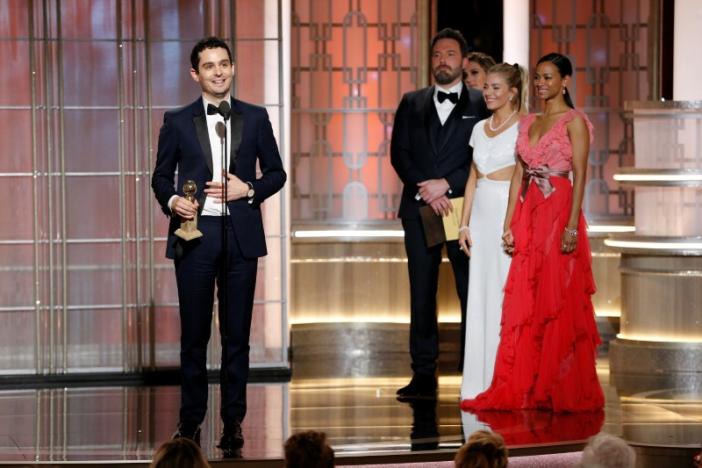
LA LA LAND LEADS FILM WINNERS AT GOLDEN GLOBE AWARDSPosted on 09 Jan 2017 |
| « Prev | 297 | 298 | 299 | 300 | 301 | 302 | 303 | 304 | 305 | 306 | 307 | Next » |
Most Viewed
No content.