

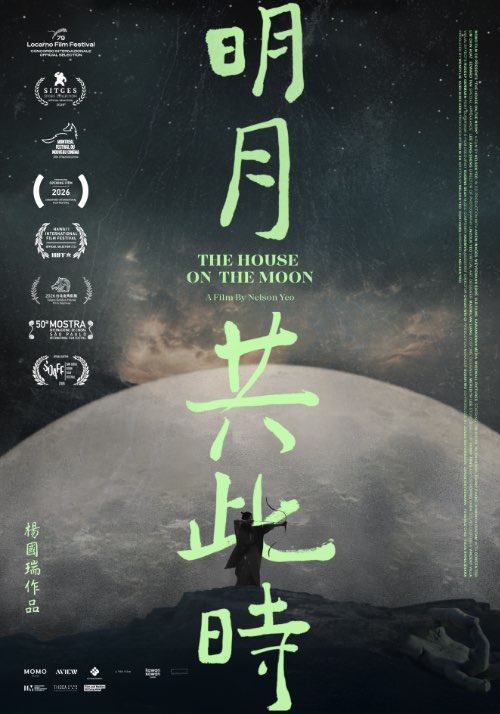
THE HOUSE ON THE MOON (明月共此時) (2026)
Genre: Action/Martial-arts
Director: Nelson Yeo
Cast: Lim Shi-An, Akira Huang, Harry Chang, Dominick Rustam
Runtime: 1 hr 44 mins
Rating: NC16 (Sexual Scene and Some Mature Content)
Released By:
Official Website:
Opening Day: 12 November 2026 (Exclusively at Filmhouse)
Synopsis: At the heart of Chinese folklore lies the timeless, bittersweet tale of Chang Er, the Moon Goddess, and her husband, the legendary archer Hou Yi. Long ago, when ten suns rose simultaneously and scorched the Earth to the brink of extinction, Hou Yi shot down nine of them, saving humanity. As a reward, he was gifted a single vial of the Elixir of Immortality. Desiring to remain with his beloved wife, Hou Yi left the potion in Chang Er’s care. However, when a malicious apprentice Peng Meng attempted to steal the divine draft, Chang Er drank it herself to protect it. Lightened by divinity, she floated into the night sky, choosing the Moon as her eternal home to remain as close to the mortal world and her husband as possible, destined to spend eternity in the stars. The House On The Moon acts as a captivating gateway to the legend's unwritten next chapter, expanding the folklore into a bold new frontier.
Movie Review:
The idea is gripping: Singapore's first wuxia feature film wrapped up in a sci-fi skin, reimagining one of the most beloved Chinese moon lore. But here's my provocative thought: this film might actually be better appreciated by those who don't speak Mandarin. Let me explain.
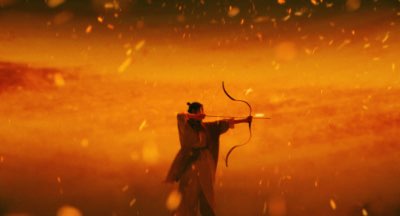
The House on the Moon recounts and expands upon the mythology of Hou Yi and Chang Er. The former is the legendary archer who shot down the extra nine suns to save humankind from a fiery fate; and the latter, his wife - best remembered for ingesting the immortality pill reward in a desperate attempt to stop tyrant, Feng Meng, from stealing it.
The storybooks end with Chang Er ascending to the moon, but for director Nelson Yeo, that wasn't enough. In his sophomore feature, he explores themes of love, duty, and identity with the mythic figures as they embark on a new mission.
In this next chapter, the last sun is dying and threatening to swallow Earth in its wake. Our stoic hero Hou Yi (Dominick Rustam-Chartrand) leaves Chang Er (Lim Shi-An) once again to save the planet from destruction - who is understandably none too pleased. After all, she's already given up life on Earth for him. When the divine archer disappears, it lands on her to locate him, suspected to be on the dark side of the moon.
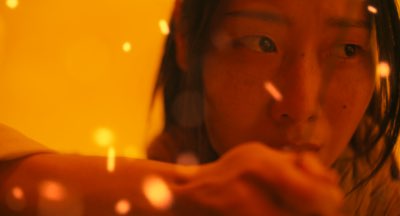
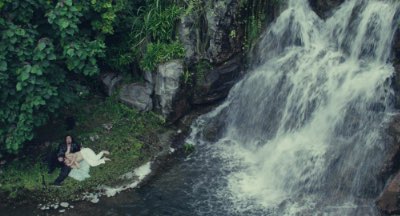
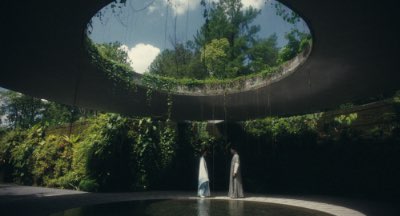
There's no doubt that Yeo, who has had a notable showing on the international festival circuit, has his own voice. His feature debut, Dreaming & Dying (2023), won the Golden Leopard - Filmmakers of the Present award, given to radical and boundary-pushing filmmakers, as well as the Swatch First Feature Award at Locarno International Film Festival in Switzerland. The House on the Moon marks another ambitious outing in the similar vein, soaked in lush, lyrical visuals and presented in a poetic, pensive tone.
But something rather fundamental got in the way of my enjoyment of the film: the accents.
Don't get me wrong: I embrace Yeo's international casting in theory. But when the script is framed in the Chinese historical vernacular, the stilted enunciations and cadences from the motley of Singaporean, Taiwanese and a Canadian actor becomes too awkward to overcome.
As Chang Er bemoans her tragic fate and makes her voyage across the barren lunar landscape, the metaphorical internal pilgrimage to reclaim her own agency is not missed. But as flashbacks unfold and a bevy of mystical characters appear, the decent performances and emotions behind them are distracted by the laboured delivery. Only The Bandit (Akira Huang) seems freed of this constraint thanks to his role as a contemporary space traveller, and it is also his expressive body language that gives a much-needed levity to the otherwise stage-heavy movement from the others. While I understand the importance of pregnant pauses and measured acting offer contemplation and gravitas, the overall effect feels one-note - robbing discoveries of their intended impact.
Equally frustrating are the fragmented plot devices and scenarios. On several occasions, Chang Er flits between wanting to kidnap The Bandit, to running away from him - often with no clear cause apart from a random encounter with another entity. There's something there to lead her in reassessing her love out of loyalty, but the random behavioural spurts feel clumsy and schizophrenic.
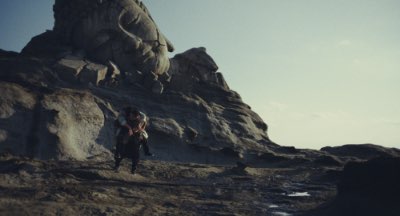
What sustained the viewing were the surreal and opulent visual storytelling - a mix of studio-crafted sets and harshly elemental landscapes that sits much better in contrast. The tribute to 90s Hong Kong cinema is clearly there, all restrained, flowy and emotional - rendered by a talented Lincoln Yeo who had to work with aspects of a virtual production (VP) studio during filming. Meanwhile, sets like Yue Lao's hideout see meaningful thought in their creation - in this case, intricately spun in red thread that aligns with the myth of the God of Love and Marriage, while providing function to the story.
Underneath it all, there's a great idea and thoughtful development from Yeo in The House on the Moon. The themes themselves are immortal and will likely resonate with audiences, and it was a joy to see the classic tale rendered with such imagination. Sadly, an overtly didactic hand and starchy script keeps us from fully immersing in this beautifully alternate universe, and unable to feel the heart of this emotional odyssey.
Movie Rating:

(Much like the satellite in the sky, The House on the Moon feels at arm's length from the audience. A visual promise that never finds its heart)
Review by Morgan Awyong
Movie Stills